Clay soil does not drain. Every other decision about driveway drainage in Hornchurch and Upminster comes back to that. Havering’s own flood strategy, published in 2025, says the geology of the borough is “predominantly clayey”, and anyone who has dug a hole in an Upminster back garden in February will know what that means in practice: a slot of grey-brown sludge that fills with water and is still full a day later. The same strategy counts 2,896 properties in the borough at high risk of surface water flooding and 24,409 at some risk. A front garden turned into a hard drive adds to that problem unless the rain is dealt with on your own land. This guide is about how to do that on clay. It covers what each type of driveway does with water, why the textbook soakaway often fails here and what we do instead.
Why London clay makes driveway drainage harder
Clay is made of very fine, flat particles that pack tightly together. The gaps between them are tiny, so water crawls through clay where it would pour through sand or gravel. Once clay is wet, it stays wet. It also swells as it takes on water and shrinks and cracks as it dries, which is why clay ground moves through the seasons.
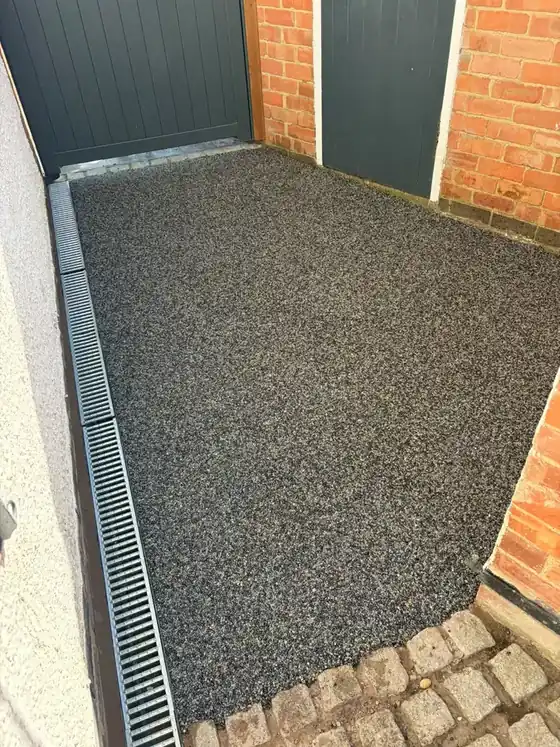
For a driveway that means two things. First, any rain that gets through the surface hits a layer it cannot easily pass, so it collects in the sub-base. Second, a base sitting in water through a wet winter softens at the bottom, and that is where ruts and sunken blocks start. A good drive on clay is built on the assumption that the ground will not take the water, and it gives the water a way out. That applies whether you choose a resin bound driveway or block paving. You see the surface. The drainage lives in the layers underneath.
What is under Hornchurch and Upminster
The picture is not uniform, and that is worth knowing before anyone quotes you. London Clay is the base layer across the area, but in places it is capped with sand and gravel left by older courses of the Thames. Hornchurch has one geological oddity of its own. In 1892, while the Romford to Upminster railway was being dug, workers exposed a boulder clay sitting in a hollow in the London Clay, with gravel above it. That deposit, now called the Hornchurch Till, is protected at the Hornchurch Cutting and marks about as far south as the ice sheets ever reached in Britain.
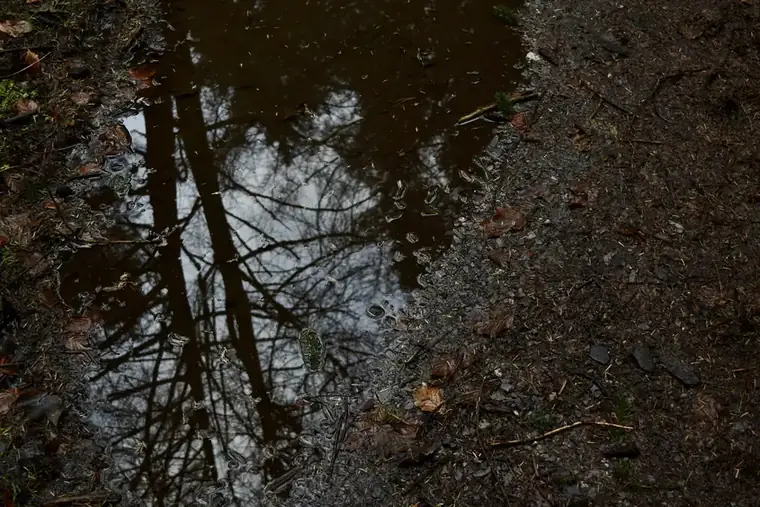
So two houses a few streets apart can sit on different ground. One may have a metre of free-draining gravel before it reaches clay. The other may hit sticky clay 300mm down. We see both on jobs around Hornchurch, Elm Park and Cranham, and the only reliable way to know which you have is to dig. A contractor who prices drainage without looking at the ground is guessing.
Where the water is allowed to go
Planning law already sets the target, and our planning permission guide for Havering covers the rules in detail. The short version is that a front driveway over 5 square metres needs to be permeable or drain onto your own garden, or it needs permission. The engineering question is how you achieve that on ground that will not soak much up.
The government’s guidance on paving front gardens deals with clay directly. It notes that on clay soils it may be necessary to connect to the pipe that already takes your roof water, and that on very clayey sites it is sensible to put a pipe in the sub-base so water does not sit there for long. It lists piping water to the drains as the last option rather than a banned one. In practice most good drives on Havering clay use a mix: the surface takes the rain, the base stores it, and a slow outlet lets it go.
The guidance also gives some limits worth checking against any design you are shown:
- Fall the drive away from the house, usually towards the road. If it has to fall towards the house, a channel at the bottom should collect the water and connect to the roof drain.
- Over a gradient of about 1 in 20, permeable surfacing may not be suitable.
- Do not put soakaways or rain gardens close to foundations. The guidance suggests at least 3 metres for a small driveway, and more on poor ground.
- Never point the water at your neighbour’s property.
Permeable block paving on clay
Permeable block paving has wider joints filled with small clean grit rather than sand. Rain runs through those joints into a base of crushed stone with no fine material, so there are open spaces between the stones to hold it. On gravel, that water sinks into the ground. On clay, it mostly does not.

The industry answer is to stop expecting the ground to do the work. Interpave, the paving manufacturers’ trade body, describes three ways to build these drives: full infiltration into the ground, partial infiltration with an outlet pipe, and a fully lined version that holds everything and lets it out through a pipe. On most Havering clay, the middle option is the one to use. A perforated pipe sits near the bottom of the stone layer and runs to a drain, so the base fills during a storm and empties over the following hours. The peak is held back, the road gullies get it slowly and the drive still counts as permeable in planning terms.
What goes wrong is someone laying permeable blocks on a normal compacted base, or on stone sitting straight on clay with no outlet. It looks identical on the day. It fails the first wet winter, when the base fills and stays full and the blocks start to sink.
Resin bound driveways on clay
Resin bound stone is porous: the resin coats each stone and leaves gaps between them, so water drops straight through the surface. That only gets the water as far as the base, and the base is where resin drives on clay most often go wrong.
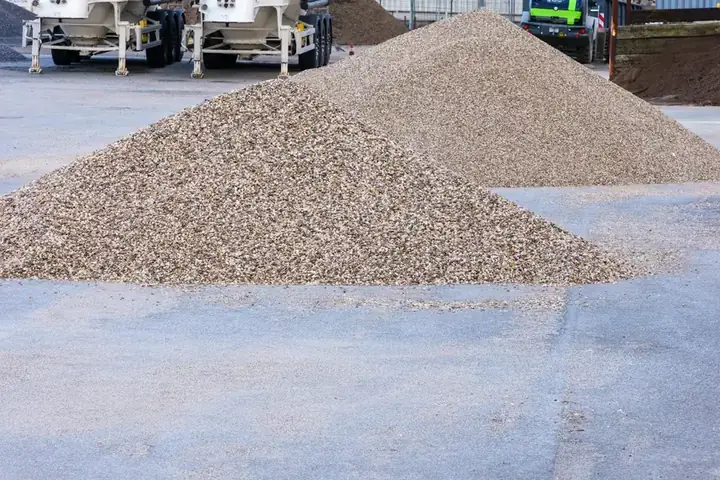
Laid over an old concrete or tarmac drive, which is the cheap way, the water passes through the resin and then has nowhere to go. It sits in the thin resin layer, freezes in a cold snap and shortens the surface’s life. Laid over a properly built open-graded base, with the same kind of outlet pipe you would use under permeable blocks, it performs well on clay. When we price a resin drive in Hornchurch or Upminster we always say which base it sits on and where the water ends up, because two quotes with the same resin can be completely different drives underneath.
Channel drains and soakaways, and why clay defeats them
The other route is to lay a conventional sealed surface (ordinary block paving, tarmac or concrete) and catch the water with a channel drain. That’s a slotted linear drain set into the surface, usually across the bottom of the drive or along the front of the house. A channel is only as good as where it empties, and the classic answer is a soakaway: a pit filled with rubble, or more often now with plastic crates, that holds water and lets it seep away.
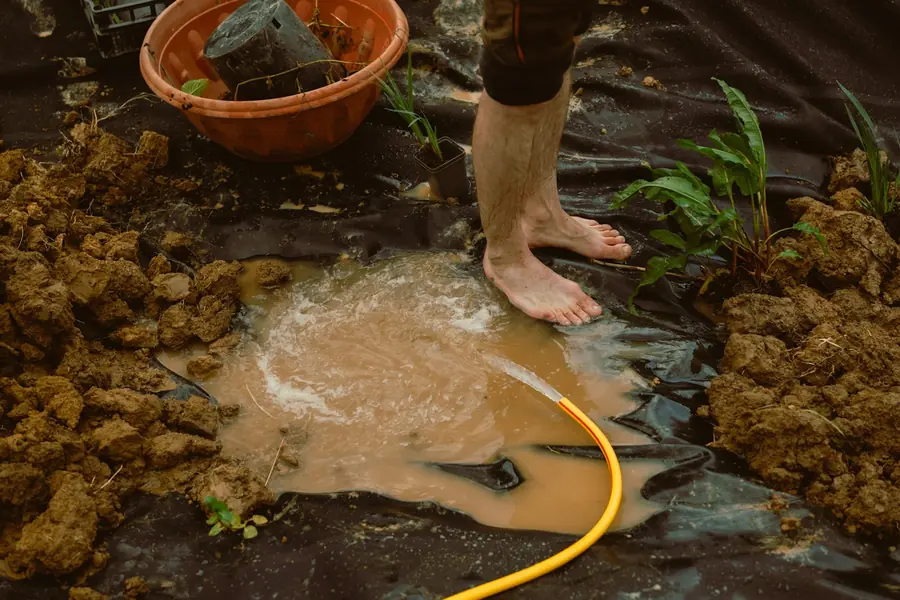
On clay the seeping part barely happens. The government guidance gives a simple test: dig a hole 300mm on each side, fill it with water, and if it takes more than 11 hours to empty you will need a pipe to a drain. On London Clay we often find the hole has hardly moved by the next morning. A soakaway in that ground is a buried tank that fills with the first heavy shower and then overflows, usually back up through the channel onto the drive.
There is also the space problem. Building control guidance for soakaways usually asks for them to be around 5 metres from a building, and a typical interwar semi in Hornchurch has a front garden that is not much deeper than that. So the soakaway either sits too close to the bay window or does not fit at all.
That leaves three realistic choices for a sealed drive on clay:
- Fall it towards a planted border or a shallow rain garden big enough to take the run-off, if your front is wide enough.
- Connect the channel to the existing surface water pipe from your roof, where there is one. A brand new connection to a public sewer needs Thames Water’s consent.
- Go permeable instead, using one of the outlet designs above.
Havering’s flood picture and your street
The borough’s flood record is mostly about rain rather than rivers. Havering’s Local Flood Risk Management Strategy and Surface Water Management Plan lists surface water as the type of flooding seen most often in the borough. In June 2016, rain over the Rom, Roding and Ingrebourne catchments flooded 460 properties across 36 locations. The Ingrebourne, which runs down the eastern side of Hornchurch, also flooded parts of Upminster and Hornchurch in 1992. In the strategy’s priority list, the Ingrebourne drainage area comes second with 1,058 properties at risk, and Elm Park and Cranham are both in the top five.
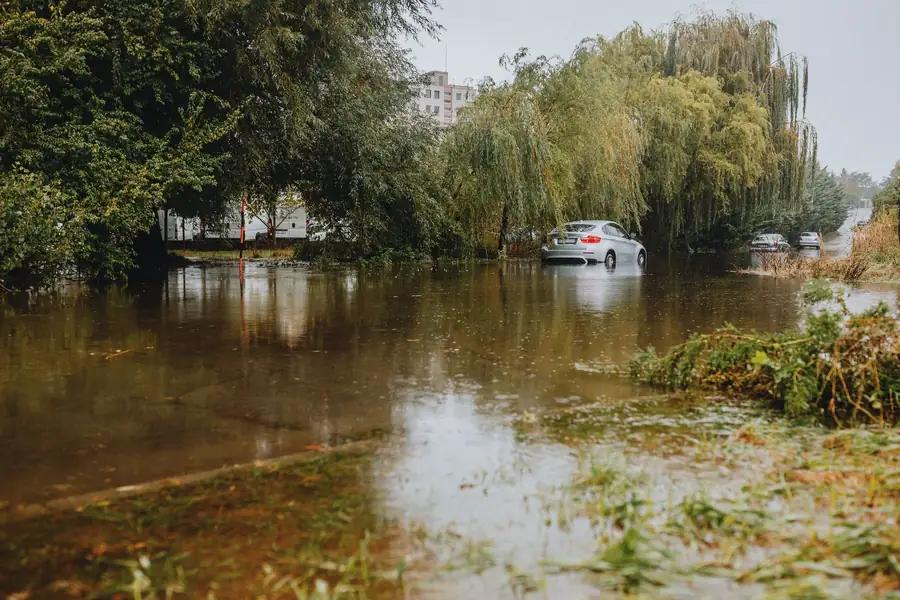
A single driveway will not flood a street. A few hundred sealed front gardens across a drainage area that is already stretched do add up, and that is the reason for the rules. For you as a homeowner, the useful step is to look up your own address on the Environment Agency’s long-term flood risk checker. If your street shows medium or high surface water risk, design the drive to hold water back, with a deeper storage base and a restricted outlet, rather than just getting rid of it. It also tells you whether the gully outside is the right place to send anything at all.
Driveway drainage questions to ask before you sign
Drainage is the part of a driveway quote that is easiest to leave vague and hardest to fix afterwards, because fixing it means lifting the surface. Before you sign, get clear answers on four things:
- Has anyone dug down to see what is under your drive, or is the drainage priced from a photo?
- Where does the water go after it passes the surface? Name the pipe, border or drain.
- For a permeable drive, is there an outlet pipe in the base, and where does it run?
- For a sealed drive with a channel, what does the channel empty into, and has the ground been tested if it is a soakaway?
We dig a test hole on every Havering job where drainage is in doubt and put the answer in the written quote. If you want the same for your drive, book a free site visit in Hornchurch or Upminster and we’ll tell you what your ground will and won’t take.