Gravel Driveways In Hornchurch & Upminster
Got a long drive and a budget that will not stretch to resin?
Grid-stabilised gravel driveways for the larger plots of Emerson Park, Upminster, Cranham and Corbets Tey, and smaller fronts that want to stay permeable
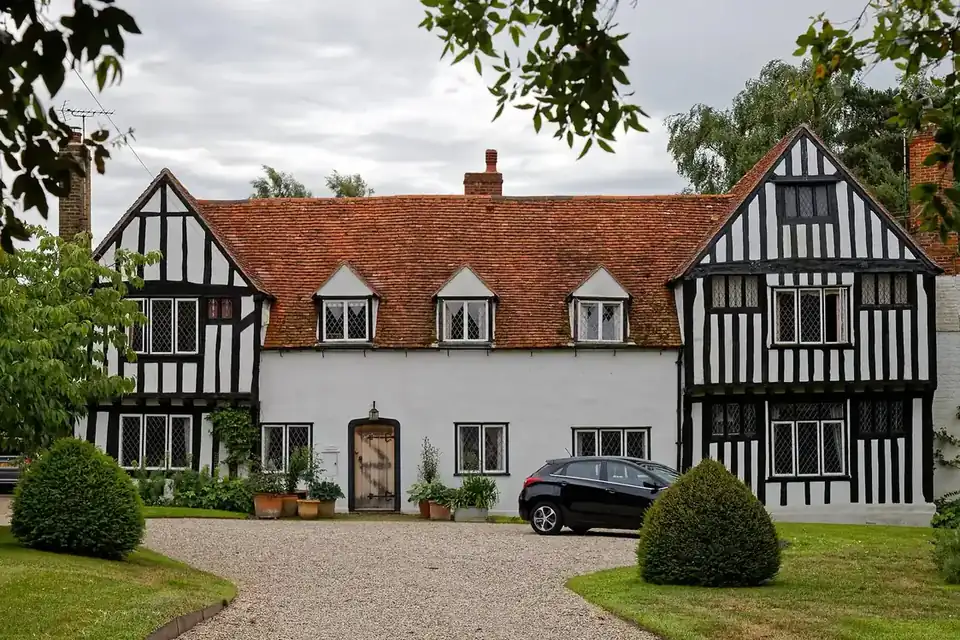
Gravel gets dismissed as the cheap option, and on a tight Elm Park front it probably is not the right one. On the acre plots of Emerson Park, the half-acre gardens north of Upminster station and the lanes out towards Corbets Tey and Cranham it is a different story. Those houses were built with sweeping gravel drives in mind, and a loose stone drive laid properly - on a compacted base, inside a firm edge, in a honeycomb grid that stops the stone migrating - is the most honest surface for them. It drains completely, it costs a fraction of resin per metre over a big area, and it makes the right noise when a car comes up it.
Free Gravel Driveways Quote
We reply the same working day, usually within the hour.
What a grid-stabilised gravel drive gives a big Havering plot
01
The cheapest permeable surface per metre
From about £45 a square metre including the dig and base. On a 120 square metre drive that is thousands less than resin, and it drains better than any of them.
02
Stone that stays where you put it
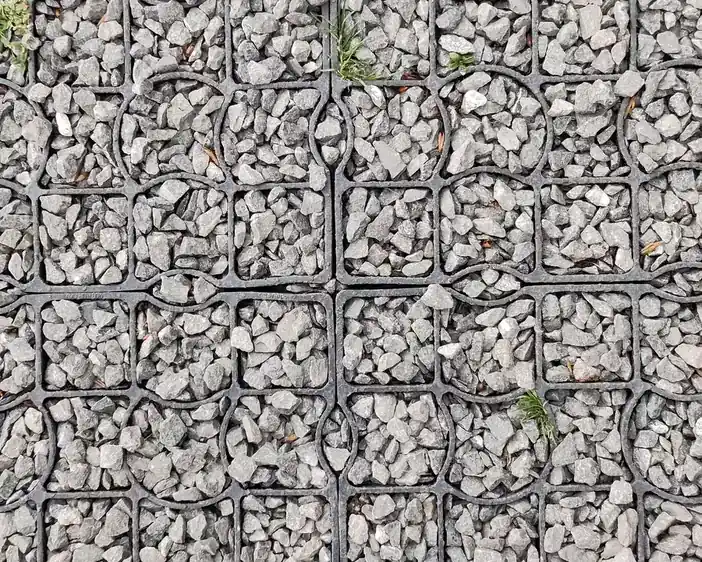
A plastic honeycomb grid holds the gravel in cells so it does not rut under tyres, wash to the gate in a downpour or migrate onto the lawn. This is the difference between a drive and a pile of stones.
03
No planning question at all
Gravel is permeable through and through, so it sits inside the 2008 rules without a channel, a soakaway or an application to Havering Council. The one exception is Gidea Park's Article 4 streets.
04
Right for the house
Emerson Park's Edwardian villas and the bigger interwar houses along Hall Lane and Parkstone Avenue were designed around gravel approaches. Block or resin can look like a car park on them.
05
You hear visitors arrive
The crunch is a feature. On a long drive set well back from the road it is the quietest security system there is.
06
Easy to live with
A rake twice a year and a top-up bag every few years. No sealing, no re-sanding, no curing. If a drain ever needs digging, the stone goes back on top as if nothing happened.
Local
Upminster Based
Hornchurch, Upminster and across Havering
6
Surface Types
Resin to gravel, one crew for all of it
Free
Site Visits & Quotes
Written, itemised and fixed
Written
Guarantee
Handed over on paper at the final walk-round
How we build a gravel drive that does not go anywhere
The grid and the edge are the whole trick. Without them you have a drive that ends up on the road.
-
Site visit
We walk the drive, check the falls and dig a trial hole. Gravel drains into the ground beneath it, so on the London Clay around Emerson Park and Cranham we check the base can actually take the water.
-
Written quote
Dig depth, Type 1 thickness, membrane, grid type, edge detail, stone type and depth, with a fixed total. The gravel itself is a small part of the price and the quote shows where the rest goes.
-
Excavation
Old surface and topsoil out to around 150 to 200mm. On established gravel drives that have sunk into mud, the old stone and the mud both come out.
-
Base and membrane
A geotextile membrane over the formation to stop clay pumping up through the base, then MOT Type 1 compacted in two layers with a roller.
-
Edge restraints
Timber, steel, concrete kerb or a block soldier course, bedded on concrete and haunched. The edge is what keeps the grid flat and the stone in.
-
Grid and bedding
A thin blinding layer, then the honeycomb grid panels laid and clipped across the whole area, cut tight to the edges and around manholes.
-
Stone and handover
Angular 10 to 20mm gravel raked into the cells and dressed over the top, a final rake, and the walk-round with the written guarantee.
-
Not sure which surface suits the house? The cost guide compares all six side by side, and the site visit is free either way.
What our guarantee actually covers on a Hornchurch and Upminster driveway
Most guarantees in this trade cover the surface, because the surface is the easy bit. Ours is written around the structure underneath, which is where a driveway on Havering's London clay either holds or does not. We put the excavation depth, the compacted MOT Type 1 thickness, the concrete haunch behind every edge and the drainage route on the quote, and we guarantee that build. If the surface sinks, spreads or ponds because any of that was not done right, we come back and fix it at our cost.
- Sub-base depth and compaction written on the quote, not left to the day
- Every edge course set on concrete and haunched, so nothing creeps
- Settlement, rutting or lifting caused by our groundwork put right free
- Manufacturer cover on resin, block and porcelain on top of ours
In
Writing, before we start
The guarantee terms go on the quote, not on a leaflet after the job
0
Overlays on a bad base
We will not lay a new surface over a base that has already failed, however cheap it would make the quote
What to ask before you order a lorry of gravel
Ask whether there is a grid. Loose gravel tipped onto a membrane looks fine for a season and then starts to move: ruts form where the tyres run, the stone piles up at the edges and the clay comes up through the thin bits. A honeycomb grid is a few pounds a square metre and it is the single thing that makes a gravel drive behave for twenty years. A quote that does not mention one is a quote for a problem.
Ask what is underneath. Gravel on a grid still needs a compacted Type 1 base, because the grid spreads the load but the base carries it. On the clay plots north of the railway a membrane under the base is essential or the clay works its way up into the stone in the first wet winter. The right answer is 150mm of compacted base at least; the common answer from the cheap end of the trade is 'we'll just put it on top of what's there'.
Ask about the stone. A rounded pea shingle rolls under tyres and never locks together. An angular 10 to 20mm gravel, whether a golden flint, a Cotswold buff or a grey granite, knits into the grid and stays put. The colour should be chosen against the house: the buff and gold stones suit the red brick of most Emerson Park villas; the greys suit render and the newer builds.
Gravel against resin, block and tarmac
Gravel is the best value permeable surface we lay and the one that suits the biggest plots. It is not the tidiest.
| Gravel | Resin Bound | Block Paving | Tarmac | |
|---|---|---|---|---|
| Expected life | 20 years plus, with topping up | 15 to 25 years | 25 to 40 years | 15 to 20 years |
| Drainage | Fully permeable | Porous throughout | Through the joints | Falls to a channel |
| Maintenance | Rake twice a year, top up occasionally | Brush and hose | Re-sand joints | Reseal every few years |
| Suits | Long drives, large plots, period houses | Any size, modern look | Interwar semis, terraces | Big plain areas on a budget |
| Guide price per m² | £45 to £70 | £80 to £120 | £75 to £115 | £55 to £80 |
| Planning in Havering | Not needed, permeable | Not needed | Not needed with drainage | Not needed with drainage |
Stone colours, edges and where the gravel stops
The stone does the talking on a gravel drive, so we choose it against the house. Golden flint and Cotswold buff warm up red brick. Grey granite and silver flint suit render and white window frames. A block or stone edge in a contrasting colour defines the drive against the lawn, and a block apron at the house end and at the gate takes the turning wear and keeps stone off the footway, which Havering's highways team will thank you for.
- Angular 10 to 20mm stone in gold, buff, grey and mixed blends
- Honeycomb grid across the full area, clipped and cut tight
- Block or stone apron at the gate and the garage door
- Timber, steel, kerb or block edging to suit the garden
"Nearly all of the gravel drives we are asked to rescue around Emerson Park and Cranham were laid without a grid, and most without a base, which is why the stone is now in the flower beds and the clay is in the drive."
Based on enquiries and jobs handled by Hornchurch & Upminster Driveways.
What a gravel driveway costs around Upminster
Grid-stabilised gravel starts at around £45 per square metre including excavation, membrane, compacted base, grid, edging and stone, and runs to about £70 where the dig is deep, the edges are long or the design has block aprons and borders. A 100 square metre Emerson Park drive comes in at £4,500 to £7,000, which is where the saving against resin is largest. What pushes it up:
- +Removing an old sunken gravel drive and the mud under it
- +A deeper dig and membrane on London Clay plots
- +Long runs of edging on a winding drive
- +Block aprons, borders and a turning pad in block
- +Premium stone such as a Scottish granite or a specific flint
Guide price from
£45/m²
Including excavation, sub-base, edging and the finished surface. Fixed in writing after a free site visit.
Get A Fixed QuoteGravel Driveways questions
Do I need planning permission for a gravel driveway in Upminster?
No. Gravel is fully permeable, so it meets the 2008 permitted development rules and Havering Council does not need an application for it. The exception is the Gidea Park conservation area, where an Article 4 direction removes that right for front and side hard surfaces on the scheduled streets, gravel included. Listed houses and flats also need checking, and we do that before we quote.
Will the gravel end up on the road?
Not with a grid and an apron. The honeycomb cells hold the stone where the tyres run, and a short block apron at the gate means the last few metres before the footway are solid. A loose gravel drive with neither is exactly how stone ends up on the pavement and on Havering's highways team's radar.
Is gravel practical on a small front?
It can be, with a grid, but on a tight Elm Park or Hornchurch semi front where you walk across the drive to the door every day, block or resin is usually the better living surface. Gravel earns its place where there is length and width, which is why most of our gravel work is north of the railway.
Does gravel work on clay ground?
Yes, with the right build-up. The membrane under the base stops the clay pumping up, the compacted Type 1 carries the load, and the grid spreads it. What you cannot do on clay is tip stone onto the ground and hope, which is what most of the failed gravel drives we see around Cranham amount to.
Can you do gravel with a resin or block path through it?
Yes, and it is a good combination on a big plot: a block or resin path from the gate to the door for feet and bins, gravel either side for the cars. The paths are built as proper surfaces in their own right, with the same base and edging.
How often will I need to top it up?
With a grid, rarely. A couple of bags every few years to refresh the surface layer is typical. Without a grid you would be topping up every year and still losing the fight, which is the main reason the grid pays for itself.
What customers around Hornchurch and Upminster say
We would rather show you a driveway than a star rating.
Customer reviews are being collected and will appear here as they come in. In the meantime, when we come out to quote in Hornchurch and Upminster, ask to see photos of recent jobs on houses like yours - and ask the other firms quoting the same question. A finished drive two streets away tells you more than a testimonial ever will.
Not sure gravel driveways is the one?
Gravel Driveways across Havering and beyond
A gravel drive that still looks like one in ten years
Free site visit for any plot in Emerson Park, Upminster, Cranham or the surrounding area, and a fixed quote with the grid, base and edge all on it.