Between Elm Park station and the Rainham marshes you can walk past almost a century of house building in about forty minutes, and nearly every era asks for a slightly different drive. Costain began the Elm Park estate in 1933. South Hornchurch filled in after the war, partly on land left by RAF Hornchurch when the airfield closed in 1962. Rainham has a village core that has been a conservation area since 1968 and, at its western edge, Beam Park, where consent now stands at close to 4,000 homes on the old Ford site. Under all of it the ground changes too, from free-draining gravel to soft marsh within a mile or two. This guide to new driveways in Elm Park, South Hornchurch and Rainham covers which surface suits which house, what the ground does to the base, the Havering rules that apply south of the District line, and what a typical front costs in 2026.
New driveways in Elm Park, South Hornchurch and Rainham: why the south of the borough is different
North Havering is mostly London Clay. Down here it mostly isn’t, and that changes the job more than people expect. The gravel drains well, so a permeable surface works without much help. But much of this land is low, and some of it sits close to two rivers and the Thames. So the questions we ask on a visit are a bit different. Where does the water go now? How far is the house above the road? Is there a verge between the pavement and the front wall?
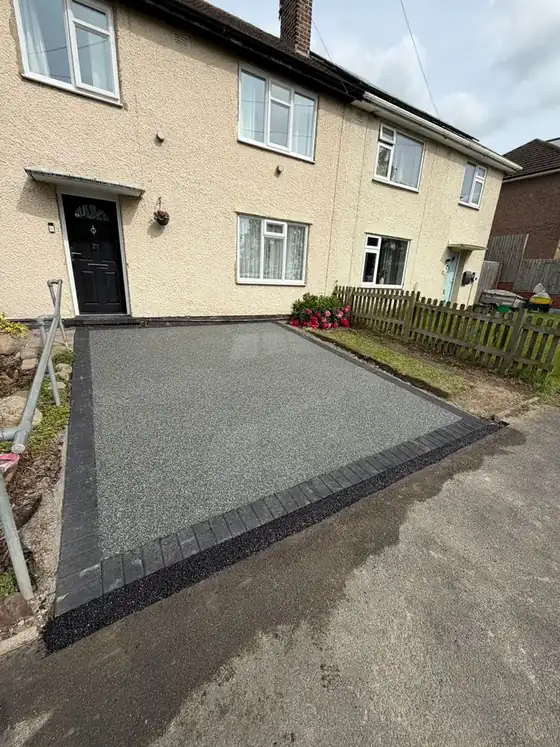
That photo is one of our own tarmac jobs on a rendered semi. Tarmac often gets written off as the budget choice, but laid with a proper fall and a block border it looks tidy for years, and it suits a plain post-war elevation better than a busy pattern would. Most people we see in this part of the borough ask about block paving driveways first. Once the drainage and kerb questions are answered, the surface usually narrows down quickly.
When your street was built, and what that left you at the front
House age sets the size of the front garden, the boundary, whether there’s a side passage and how the old surface was laid. Work out which of these your street belongs to before anyone comes round to quote.
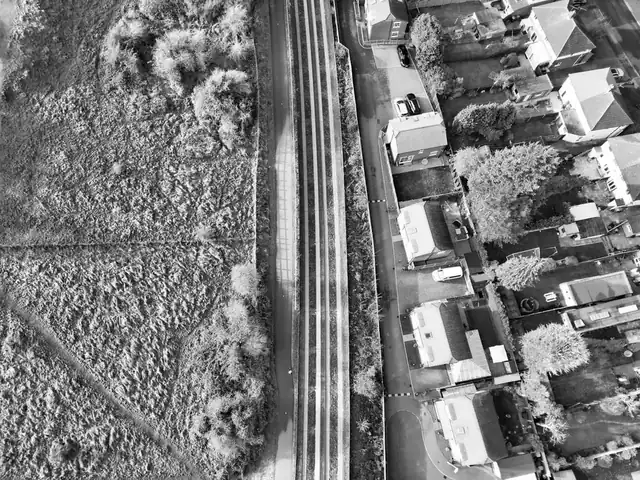
Elm Park: the Costain estate, 1933 onwards
Richard Costain and Sons bought three farms and sold Elm Park as a garden city, with the station opening in 1935. The council accepted a tighter layout than on earlier estates, and you can still see it. Frontages are short, semis sit close together and the shared side path is often original concrete. On a lot of these fronts the old drive has been relaid at least once, sometimes over the top of the previous one. When we dig it out we often find two surfaces stacked up, which raises the level and pushes water towards the door.
South Hornchurch: council streets, airfield estates and Orchard Village
South Hornchurch is a newer place name, coined when the housing went up. Hornchurch Urban District Council named some of its streets after New Zealand places in 1947, a nod to the New Zealand convalescent hospital at Grey Towers during the First World War. The airfield’s technical buildings came down in the late 1960s and estates replaced them, with streets named after the station’s pilots. Further south, the council built the high-density Mardyke estate in 1964, and Circle Housing has since replaced it with Orchard Village, around 555 new homes. So you get a mix: brick council semis and short terraces, many now privately owned, often with a grass verge and no dropped kerb, plus 1960s and 70s private houses with integral garages and open-plan fronts.
Rainham: the old village and the newest building in Havering
Rainham’s roads were first laid out in the 1880s, but most of its houses are post-war suburban semis spreading out from Upminster Road South and the Broadway. The newest homes are at Beam Park, a Countryside and L&Q scheme on the former Ford works by the A1306. Much of that is flats and managed parking. The houses there, like those on most new estates, came with drives already built.
Gravel, marsh and two rivers under the drive
South of the railway, most gardens sit on Thames terrace sand and gravel. It’s good ground for a drive. Rain soaks away within hours, the stone compacts firmly and it doesn’t swell and shrink the way clay does further north. If you want to see the mapping for your road, the British Geological Survey’s geology viewer shows the terrace deposits and where they give way to alluvium.

The trouble comes in two places. The first is the low ground. The River Beam runs down the western side of Elm Park and the Ingrebourne down the eastern side of South Hornchurch to Rainham. Between them, Havering’s flood strategy names Elm Park as a Critical Drainage Area, which means surface water collects there in heavy storms because there’s nowhere quick for it to go. A drive that tips its water onto a road like that just adds to the problem. The second is the marsh. Towards the Thames the gravel thins out into soft alluvium, the ground the 1953 tidal surge flooded across South Hornchurch and Rainham. It holds water, it settles under load and a soakaway dug into it often won’t drain at all.
Before you commit, put your postcode into the government’s long term flood risk checker. It splits risk into surface water, rivers and the sea, which tells you more than a single “high” or “low”. On gravel we build a normal permeable base. On the marsh side we dig deeper, lay more compacted stone over a geotextile and usually take the water to a channel drain rather than trusting the ground to absorb it.
Matching the surface to the house
No surface is wrong for a house as such. What matters is how it suits the plot, the drainage and how much upkeep you’ll put up with. Here’s how it usually works out on the houses we see down here.
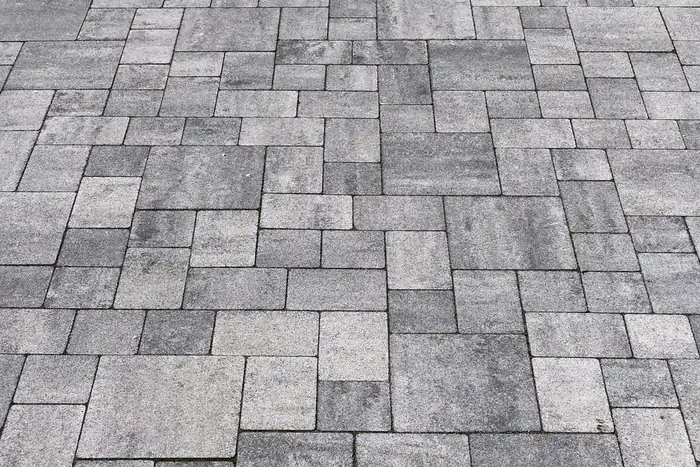
On a Costain semi in Elm Park the front is short and shallow, so the falls matter more than the finish. Resin bound over an open-graded base, or permeable block with open joints, will both send the rain straight down into the gravel. Keep to one plain colour, charcoal or brindle, and a small front won’t look cluttered.
The council-built semis and terraces of South Hornchurch are often the cheapest fronts to do well. Block paving copes with a car turning in over a verge-side crossover, and you can lift a single row when someone needs to dig a utility trench. Gravel on a plastic grid costs less. On a front that opens straight onto a busy pavement, though, the stones tend to wander.
Houses from the 1960s and 70s with integral garages have wider, flatter fronts. Tarmac with a block border is good value on those, with a slot drain across the garage mouth, and resin looks right against plain brick or tile hanging.
In Rainham it depends which end you’re at. On the gravel streets near the village any of the four surfaces works. On low ground nearer the A13 we’d steer you towards block or tarmac over a deeper base, since both put up with a little settlement better than a thin resin layer.
If you’re stuck between resin and block, our Gidea Park, Emerson Park and Harold Wood guide shows how the same choice plays out on the clay further north. It’s a useful contrast with the gravel down here.
Planning: the permeable rule, flats and the newer estates
For an ordinary house, the national rule from 2008 is simple. A new or replacement front drive of any size needs no planning application if it’s permeable, or if it drains onto a lawn or border inside the garden. Cover more than 5 square metres with a sealed surface that runs off to the road, and Havering expects an application. The government’s guidance on permeable surfacing of front gardens explains which surfaces count and how a rain garden or soakaway can make a sealed drive acceptable.
Three groups of people in these areas need to check more than that:
- Anyone in a flat or maisonette. The permitted development right only covers houses, so in a converted house or a block any new hard standing needs a full application.
- People on the newer estates. Developments like Beam Park are sometimes approved with conditions that take away permitted development rights or fix the parking layout, and the estate’s planning decision notice will say so. If you rent from a housing association, at Orchard Village or anywhere else, you also need the landlord’s written consent first.
- Houses inside the Rainham conservation area, which covers the old village and the riverside. There’s no Article 4 direction, so the permeable rule still applies, but a new wall, a gate or a loud material will get a closer look.
Elm Park and South Hornchurch have no conservation areas over their housing, so for most houses the permeable rule is all you need to think about.
Crossing the pavement: dropped kerbs south of the District line
Plenty of South Hornchurch fronts have never had a car on them. The council streets were built when few tenants owned cars, so the kerb is full height and there’s often a grass verge between the pavement and the road. You can’t legally drive over either without a crossover, and in Havering only the council or its approved contractors can build one.

The process is an online application with a non-refundable £261 fee, then a site inspection and a separate quote for the build. Some roads add a planning step for the new access. Around here that list includes Elm Park Avenue, Abbs Cross Lane and South End Road in Elm Park, and Upminster Road and Berwick Pond Road in Rainham. A verge with a tree, a lamp column or a drain cover in the wrong place can mean a refusal, so look at what’s outside your house before paying for anything. Our post on Havering dropped kerb applications covers the order of events and how long each stage tends to take.
We usually set the finished level of the drive to meet the new crossover. That’s one reason to get the kerb approved before the drive goes in, not after.
What new driveways in Elm Park, South Hornchurch and Rainham cost in 2026
Our guide rates per square metre, covering dig-out, base, edging and surface, are £45-70 for gravel on a grid, £55-80 for tarmac, £75-115 for block paving and £80-120 for resin bound. Here’s how that works out on the three most common fronts we price in the south of the borough.
An Elm Park semi with a short front, about 30 square metres
Expect roughly £1,650 to £2,400 in tarmac, £2,250 to £3,450 in block paving and £2,400 to £3,600 in resin bound. If the old concrete falls towards the house, getting the levels right is part of the dig. Where the street floods, a channel drain and a small soakaway into the gravel usually add a few hundred pounds.
A South Hornchurch house behind a verge, about 35 square metres
In block paving that’s around £2,600 to £4,000, and gravel on a grid comes in at roughly £1,600 to £2,450. On top of that, budget for the £261 kerb application and the council’s construction quote. A long crossover over a wide verge can cost as much as a small drive.
A Rainham semi, about 45 square metres
On the gravel streets near the village, tarmac runs to about £2,500 to £3,600 and resin bound to £3,600 to £5,400. On the marsh side, based on the jobs we price there, the extra base depth tends to add another £10 to £20 a square metre, and the channel drain shows as its own line on the quote.
Every figure assumes normal access. A front with no side gate, where everything has to be wheelbarrowed through the house, costs more. If you’d like a figure for your own front, with the ground, the kerb and any planning question checked first, ask us for a free driveway quote.