Ask most people how long a new driveway takes and they think about the day the surface goes down. That is the quick bit. On a typical Hornchurch or Upminster semi we are on site for three to five working days, and most of that time goes on digging out, carting away and building a base you will never see. Before that there can be a much longer wait if you also need a dropped kerb, because Havering’s own policy allows up to 16 weeks from application to installation. And after we leave, a resin drive needs around 72 hours before a car goes on it. This guide walks through the timeline by surface, what tends to add days in Havering in particular, and how to get through a week without your drive. If you are still at the stage of comparing prices, our cost guides cover that in detail and are linked below. This one is about the calendar.
How long a new driveway takes in Hornchurch and Upminster, surface by surface
Here is the short version for a two-car front of 40 to 50 square metres, the size most interwar semis around Hornchurch, Elm Park and Upminster give you once the lawn and wall have gone.
| Surface | Days on site | Walk on it | Park on it |
|---|---|---|---|
| Block paving | 3 to 4 | Same evening | After 24 to 48 hours |
| Resin bound (full dig) | 3 to 4 | After about 24 hours | After about 72 hours |
| Tarmac | 3 to 4 | Once cool | Next day |
| Gravel on a grid | 2 to 3 | Straight away | Usually the day we finish |
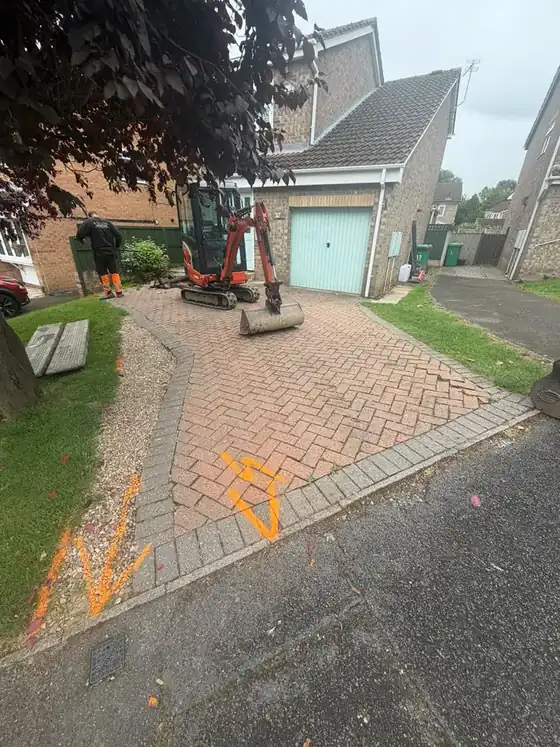
Those figures assume a straightforward dig and dry weather. Large drives in Emerson Park or north Upminster, at 80 to 120 square metres, can run to a week or ten days once walls, steps or a long drainage run are added. You’ll see that every surface needs roughly the same first two days, because the dig and the base are much the same whatever goes on top. If you want to see how the work breaks down on a particular finish, our block paving driveways page shows each stage of the build.
The weeks before anyone digs
Most of the waiting happens before we turn up. After the site visit we send a written, fixed quote within two working days. From there, the start date depends on our diary, the time of year and whether anything has to be ordered in.

The thing that really sets the pace is the kerb. If your house has no crossover yet, Havering Council builds it, and only after the forecourt is paved. Its policy allows up to 16 weeks from application, and the council’s quote for the work is only valid for three months. We have a separate guide to applying for a dropped kerb in Havering that sets out the order of jobs, so we won’t repeat it here. The practical point is that you should apply early and book the drive to finish inside that three-month window, not the other way round.
Skips, pallets and the pavement
A driveway dig fills skips fast. Most front gardens can’t hold one, so it goes on the road, and that needs a licence. Havering issues it to the skip company rather than to you, and a new one covers 14 days. The council’s skip and building materials licence page warns of a delay in processing applications, so we book well ahead. Pallets of blocks or bags of stone left on the footway need their own building materials licence too. The legal requirement for skips comes from section 139 of the Highways Act 1980, which also requires a skip on the road to be lit at night and properly marked.
Block paving: three or four days, most of them spent below ground
Day one is demolition. The old surface comes up, any front wall comes down, and the mini digger takes the ground out to depth. Day two is the base: Type 1 stone laid in layers and compacted, with the edging blocks set in concrete along the boundaries.
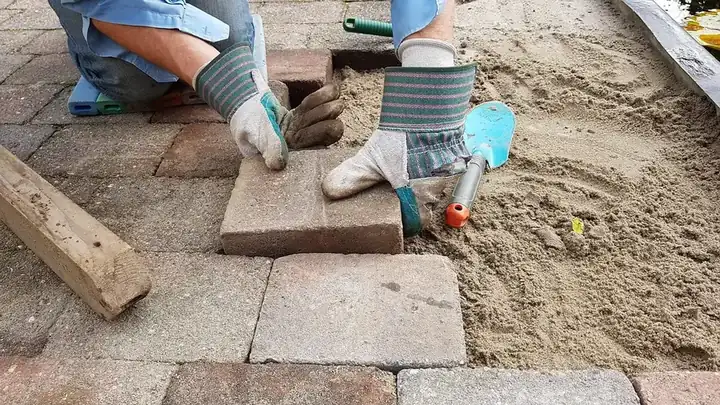
The concrete under the edging needs a night to go off before anyone vibrates blocks against it, which is why the laying usually starts on day three. A plain stretcher bond goes down quickly. Herringbone takes longer, mainly because of all the cut blocks along the edges, and a front with curves, a step or a manhole cover to cut around can add half a day. The last job is brushing kiln-dried sand into the joints and running the plate compactor over the whole drive, which locks the blocks together. You can walk on it that evening. Give it 24 to 48 hours before the car goes on. For what each of those choices does to the price, see our block paving cost guide.
Resin bound: the base takes days, the resin takes a morning
People are often surprised that resin goes down so quickly. On a semi front the whole surface can be mixed and trowelled in a morning, working in batches from the far end towards the gate. But that morning comes at the end of two or three days of the same dig-and-base work a block drive gets, plus a layer of open-graded tarmac or concrete for the resin to bond to.
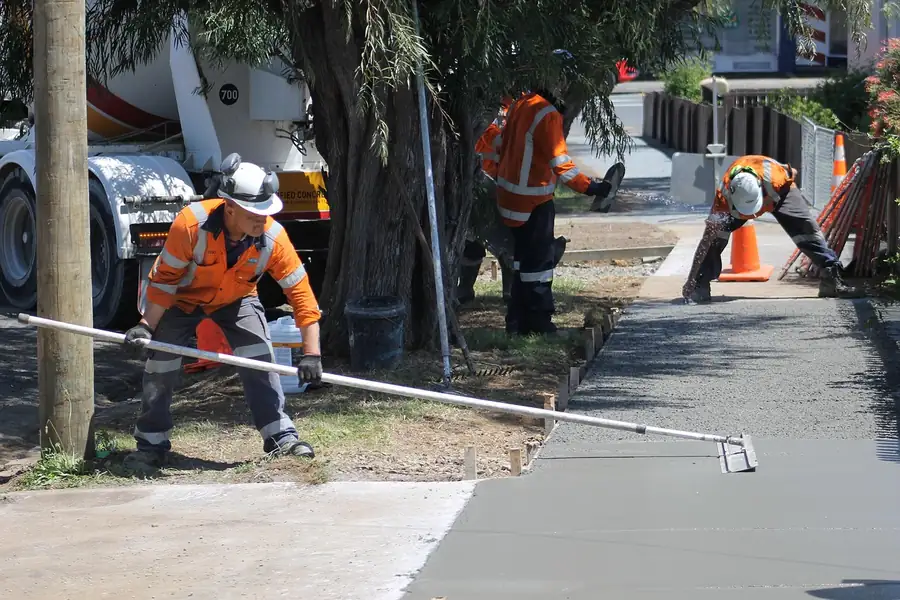
Resin is fussier about the weather than any other surface we lay. The base has to be dry, and the day has to stay dry until the surface has skinned over. Most resin systems also set a minimum air temperature a few degrees above freezing, and the exact figure is on the maker’s data sheet. So in a wet week, resin is the job most likely to slip a day or two. A sound concrete drive can sometimes be overlaid without digging out, which cuts the job to a day or two, but we only say that after a trial hole on the visit. After laying, keep off it for around 24 hours, and keep the car off for around 72, longer in cold weather. Our resin driveway cost guide explains why that overlay route is so much cheaper.
Tarmac and gravel: the quickest builds
Tarmac follows the same pattern of two or three days for the dig and base. Then both courses go down hot on a single day: a thicker binder course first, then the finer wearing course rolled on top. It has to be laid while it is hot, so the lorry arrives when we’re ready and we don’t stop until it is finished.

Leave it overnight and you can park on it the next day. In a hot summer it stays slightly soft for a while longer, so for the first few weeks avoid turning the steering wheel while the car is stationary. Our tarmac cost guide breaks down where the money goes on that build.
Gravel is quicker still. Once the base is compacted, the membrane, grid panels and stone go in within a few hours, and there’s nothing to cure. On a simple front the whole job is often two days, three with a block apron at the gate. We went through grids, stone sizes and edging in our most recent post, on what a gravel driveway costs in Hornchurch and Upminster.
What adds days in Hornchurch and Upminster
Ground is the biggest variable. South of the railway, around Elm Park, South Hornchurch and south Upminster, the drive sits on sand and gravel that drains within hours of rain. North of it, through Emerson Park, Ardleigh Green, Cranham and north Upminster, it’s London Clay.
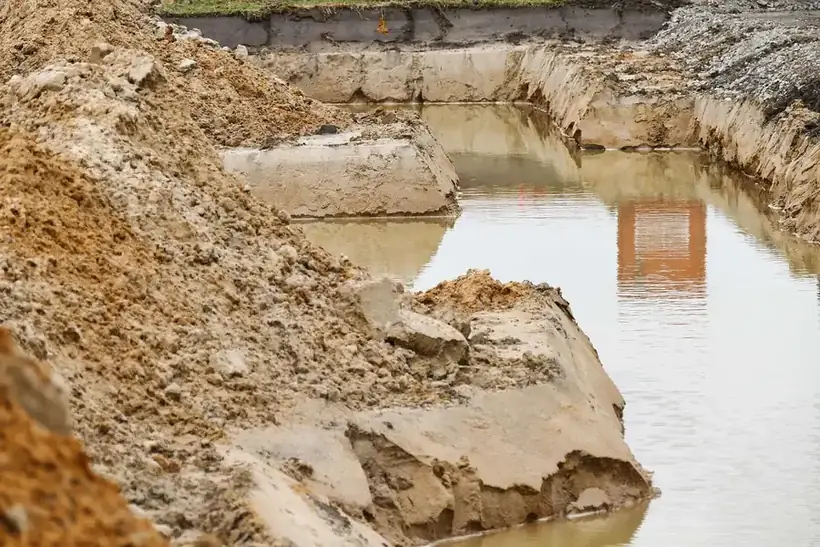
Clay that gets rained on while it is exposed turns into something like putty. You can’t compact stone onto it, because the stone just pushes into the clay. The answer is to pump out any standing water and either wait for the surface to firm up or dig out the soft layer and put down more stone and a membrane. Either way, a heavy downpour on day one or two can cost us a day. If the diary allows, it’s worth not starting a dig on clay with a wet week forecast.
The spoil is another factor people underestimate. Digging out 45 square metres to 200mm deep lifts about nine cubic metres of ground, and clay bulks up once it’s dug, so you end up with more like eleven or twelve. That’s several skips’ worth, or a grab lorry or two, and every load has to be booked and collected on time. Old concrete that has to be broken out adds another day on top of the digging.
Smaller things that add up
- Drainage. A channel drain at the gate adds a few hours. A soakaway on clay means a soakage test first, and that hole may need to stand full overnight before we know if it drains at all.
- Inspection chambers. Manhole covers sitting in the wrong place or at the wrong level have to be raised or reset before we build up around them.
- Walls, piers and steps. Brickwork has its own drying time and can add two or three days on a larger front.
- Utilities. Gas and water meters, shallow cables and pipes found during the dig all slow things down.
A week without your drive: cars, bins and deliveries
For most of the job you can’t use the drive, so the car goes on the road. On most streets in Hornchurch and Upminster that’s no problem. If your road is one of Havering’s permit parking areas and controlled parking zones, sort out visitor vouchers before the start date, not on the first morning. If you have two cars, a friendly neighbour with spare space saves a lot of shuffling about.

Tell us your bin day at the site visit. Bins usually live on the drive or down the side passage, and on collection day they need a route to the kerb. We plan a way through for them, but that route can’t cross wet resin or a freshly levelled sand bed, so on some days the bins may need to go out the night before.
Deliveries are easy to overlook. Couriers tend to walk straight across a front garden, so put a note on the door for the first few days and ask for parcels to go to a neighbour or a safe place round the back. Children, dogs and cats are the other risk. A paw print in wet resin is there for good, so keep pets inside until the surface has gone off.
Then there’s the gap if the council’s crossover is still to come. Once the drive is finished you still can’t drive across the footway until the dropped kerb is built, so plan for some weeks of parking on the road.
The first month on a new driveway
Once the car is back on, the surfaces each settle in their own way. Block paving loses some of its jointing sand as the joints settle and rain washes them through. Brushing in more sand after a few weeks, and again after the first winter, keeps the blocks tight. Tarmac and resin both stay a bit soft through their first hot spell. Keep jacks, motorbike stands and skip wheels off them, and expect faint tyre marks where you park every day.

Gravel needs a rake over once the tyres have found their usual line. If you want to know how long each surface lasts after that first month, we covered it in our guide to driveway lifespans in Havering.
If you’re planning a drive for next spring, the best time to have the visit is now, before the busy months book up and while there’s still time for a kerb application. Book a free site visit in Hornchurch or Upminster and the quote will tell you exactly which days we need.