Most people who ask us about a porcelain driveway in Hornchurch or Upminster have just had a porcelain patio done at the back and like it. Fair enough. It stays clean, it doesn’t go green under the fence and it looks sharp against a 1930s brick bay. The trouble is that a patio carries a garden table and a barbecue, while a drive carries a car weighing around a tonne and a half that turns on the spot every morning. Porcelain, sandstone and granite can all take that load, but only when the slab, the bed and the base are chosen for it, and on Havering’s clay the base matters even more. This post covers what each stone needs to survive a car, how we build under it, how Havering’s 5 square metre rule applies when the surface doesn’t drain, and what a stone or porcelain front costs in 2026 next to block paving and resin.
Porcelain and natural stone driveways: which slabs can take a car?
Thickness and size decide most of it. Outdoor porcelain is normally 20mm thick, and the slabs on show at most merchants are big: 900 x 600mm planks or 1200 x 600mm. Porcelain is very hard but it is also brittle. A big thin slab with a car wheel near one corner acts like a lever, and if there is any hollow in the bed beneath, it snaps. The same porcelain we lay on patios across Havering can go on a drive, but we drop to 600 x 600mm or 600 x 300mm, and where the range allows we use the 30mm version made for vehicles.
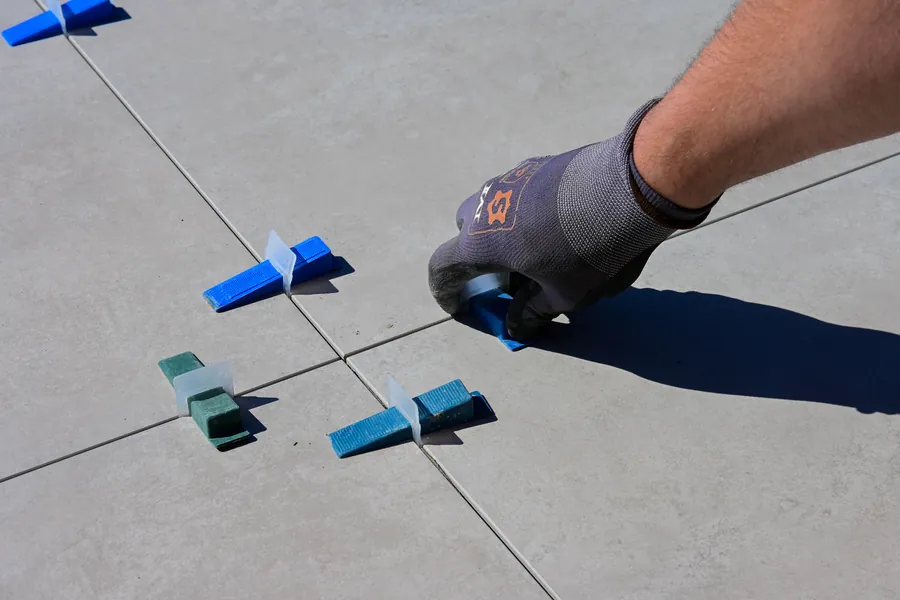
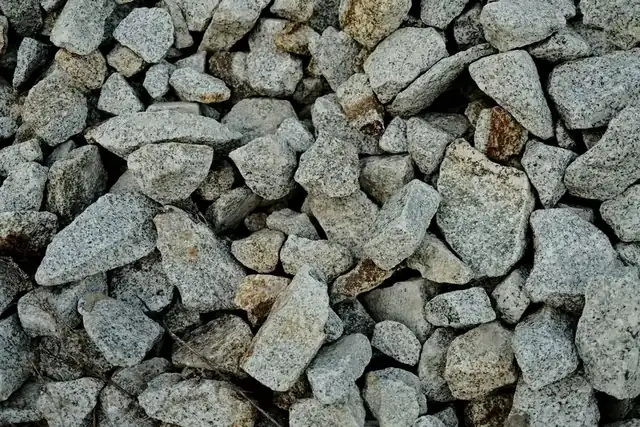
Natural stone works the other way round. Sandstone and limestone are soft enough that the thin 22mm calibrated patio flag is a non-starter under a car; you want 30 to 50mm stone, or setts. Granite is the toughest of the three. Sawn granite setts around 100mm deep have been paving London streets for well over a century, and on a domestic drive they will outlast the house. They cost more to buy and lay, mainly because every sett is set by hand.
Why a stone driveway needs a concrete base, not sand
Block paving sits on a bed of sharp sand and stays put because the blocks lock against each other and the edging holds the lot in. Slabs don’t interlock. A 600mm slab on loose sand rocks under a car until a corner breaks or the joint opens, so every porcelain or stone drive we lay is a bound build, meaning concrete underneath and mortar on top.
From the bottom up, that means a compacted crushed-stone sub-base, a concrete slab with steel mesh in it, then each piece of paving bedded on a full bed of mortar with no voids. Porcelain also gets a priming slurry painted on its back, because it is so dense that ordinary mortar won’t grip it. Dot-and-dab, where a slab sits on five lumps of mortar, is a patio shortcut that fails fast under a car. Joints are filled with a cement-based or resin-based grout, and the concrete gets movement joints at intervals so it can crack where we choose rather than wherever it likes.
Building it on London clay: depth and movement
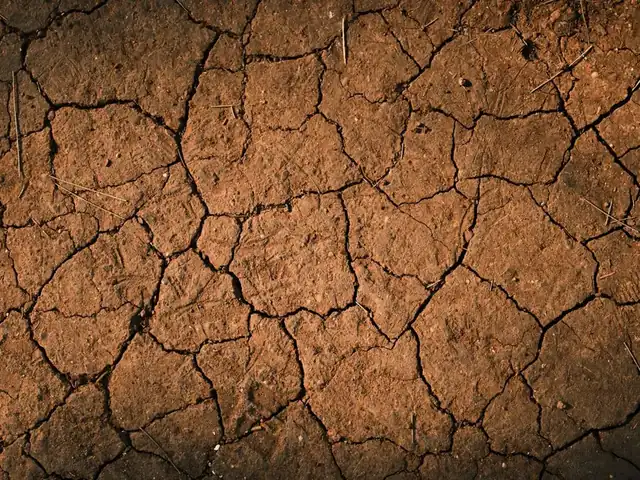
Hornchurch and Upminster mostly sit on London Clay, sometimes with a layer of Thames gravel on top. Clay changes volume as its moisture changes. In a long dry summer it shrinks and cracks; through a wet winter it takes water back and swells. Under a flexible block drive that shows up as gentle dips. Under a rigid concrete base topped with brittle porcelain it can show up as a crack straight through a slab, which is a much more expensive repair.
So on clay we dig deeper than a block drive would need, typically 300 to 350mm below finished level, to get past the topsoil and the softest clay. The sub-base goes in thicker, the concrete gets mesh, and the bays are kept small with joints lined up through the paving above. Trees make it worse. A mature street tree or a big conifer in the front garden can pull a surprising amount of water out of the clay in August. If one is close to where the car will sit, we’ll tell you at the site visit, and sometimes that is the point where block paving becomes the better answer.
Water, permeability and Havering’s 5m² rule
Porcelain is close to waterproof and a mortar joint is too, so a stone or porcelain drive is an impermeable surface. Since October 2008, paving more than 5 square metres of front garden with something impermeable needs planning permission unless the rain is sent onto permeable ground within your own boundary. The government’s guidance on permeable surfacing of front gardens sets out the options, and the Planning Portal’s page on paving a front garden covers the permission side. The London Borough of Havering is the authority that decides if you do need to apply.
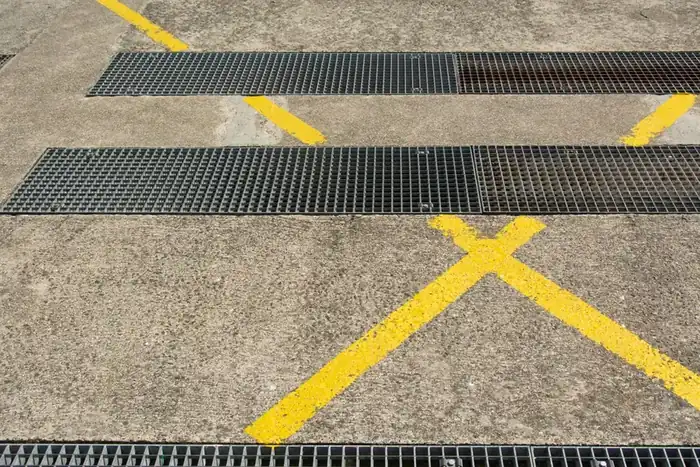
In practice we fall the drive towards a planted border, a strip of lawn or a gravel margin and let the water go there, or we run a channel drain across the bottom and pipe it to a rain garden or the existing surface water pipe from the roof. Clay makes both harder because it won’t soak water away quickly. We’ve written about that in more detail in our piece on driveway drainage on Havering’s London clay, and it is worth reading before you settle on a fully sealed front. If you’re in Gidea Park, the front garden rules there are tighter again, so talk to the council before anything gets lifted.
Porcelain, sandstone or granite on a Havering front drive
Each one ages differently, and a front drive sees things a patio never does: engine oil, tyre marks, de-icing salt walked in from the pavement, and wet leaves dropped by whatever is growing over the fence.
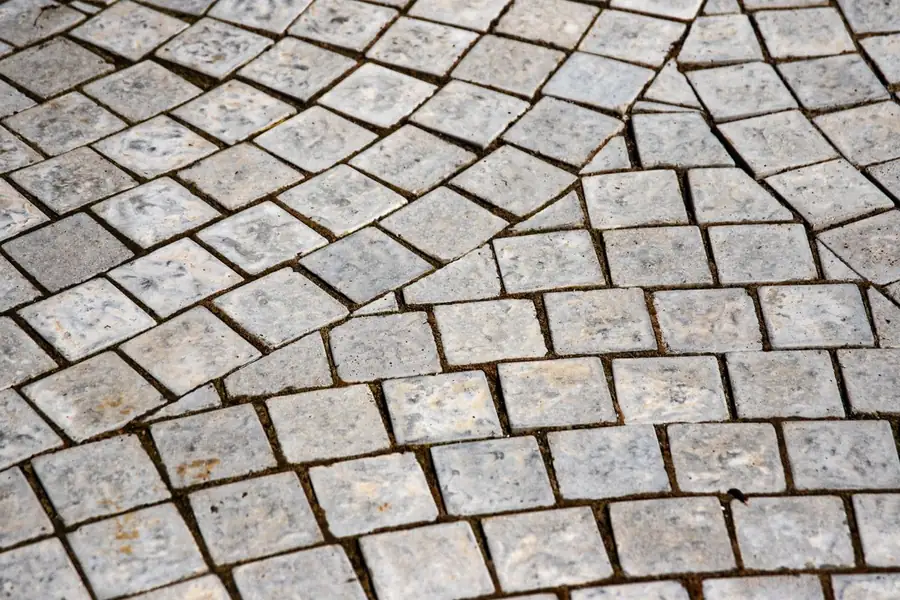
Porcelain absorbs almost nothing. Oil drips wipe off, salt doesn’t hurt it and moss struggles to get a foothold. Ask for the slip rating, though, because some cheaper ranges get greasy in the rain. A cracked slab stands out badly, and matching a discontinued colour years later can be hard, so buy a few spares and keep them in the shed.
Sandstone looks warm against old red brick. It is also porous. Oil and rust stain it, black spot lichen can appear, and without a sealer it doesn’t stand much chance. We’d steer you away from it on the part of the drive where the car actually sits.
Granite, in setts or flamed slabs, is dense enough that a dropped spanner won’t chip it, and the speckled grey hides marks far better than sandstone. A fresh oil spill still wants cleaning that day.
Plenty of people end up mixing them: granite setts or porcelain where the wheels go, and something softer-looking for the path to the front door.
2026 costs compared with block paving and resin
Stone and porcelain cost more than the surfaces most Hornchurch drives are laid in, for three reasons: the concrete base, the price of the material itself, and the cutting time, since every slab around a manhole cover or a curved border is cut with a diamond saw. Our own guide figures for 2026 run like this, per square metre laid:

- Porcelain on a concrete base: about £130 to £180
- Sandstone, 30mm or thicker, on a concrete base: about £115 to £160
- Granite setts: about £140 to £200
- Block paving: £75 to £115
- Resin bound: £80 to £120
On a typical 45 square metre two-car front, that puts porcelain at roughly £5,850 to £8,100 against £3,400 to £5,200 for blocks. Our block paving cost guide for Hornchurch and Upminster breaks that cheaper end down further. Dig-out and skips, the drainage, edging and any Havering dropped kerb come on top of all of these, and the kerb is the same price whatever you lay. Where budget is tight, a common compromise is block or resin for the main parking area and porcelain on the path and step to the door.
Keeping a stone or porcelain drive looking right
Porcelain wants very little. A brush, a hose and the occasional wash with a mild detergent keep it clean, and grout joints are the only part that can take moss. Avoid acid cleaners on cement-based grout, and don’t take a pressure washer close to the joints at full power or you’ll strip them out.
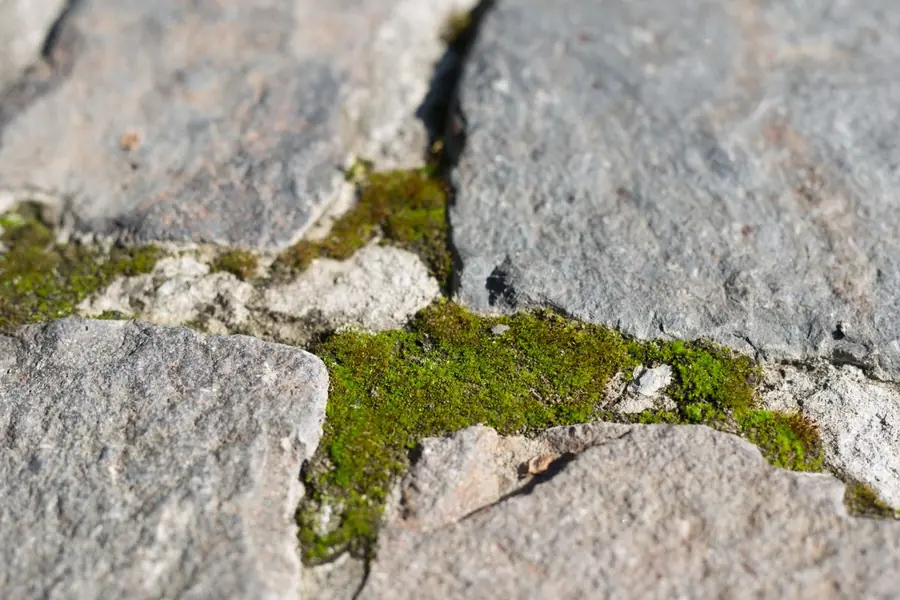
Sandstone needs more effort. Reseal every few years, clean oil spots the week they happen, and treat green algae before it gets into the surface. Granite sits somewhere between the two. Whatever the stone, check the joints each spring; a cracked joint lets water under the slab, and in a frost that water lifts it.
If you’re weighing up a porcelain or stone front against something cheaper, we’ll come and look at the ground, the trees and where the water can go, then price both options side by side. Book a free driveway survey in Hornchurch or Upminster and we’ll give you the figures in writing.