Pattern imprinted concrete, which most people around here still call “printed” or “PIC”, had its big moment on Havering’s front gardens in the 1990s and 2000s. Plenty of those drives are still down, some looking tidy and some gone chalky and cracked. For 2026, a fair guide to the imprinted concrete driveway cost in Hornchurch is £80 to £115 per square metre for a properly built job. That puts it next to block paving and resin bound, not down with tarmac. Where a particular drive lands in that band has more to do with the ground and the slab than with the pattern you pick. Below, the rate is worked through on the fronts you see most often in RM11, RM12 and RM14, along with what a slab will and won’t put up with on London Clay. Then there’s the money due after it’s laid, which hardly anyone mentions at the quote stage.
Imprinted concrete driveway cost in Hornchurch: what £80 to £115 a metre buys
Imprinted concrete is one slab poured in place. Ready-mixed concrete is spread over a compacted stone base, usually around 100mm deep with a steel mesh set inside it. While it’s still wet, a coloured hardener goes onto the surface, then a release powder, and the crew press rubber mats over it to leave the pattern of setts, slate or cobbles. A couple of days later the powder is washed off, joints are cut, and the surface is sealed.
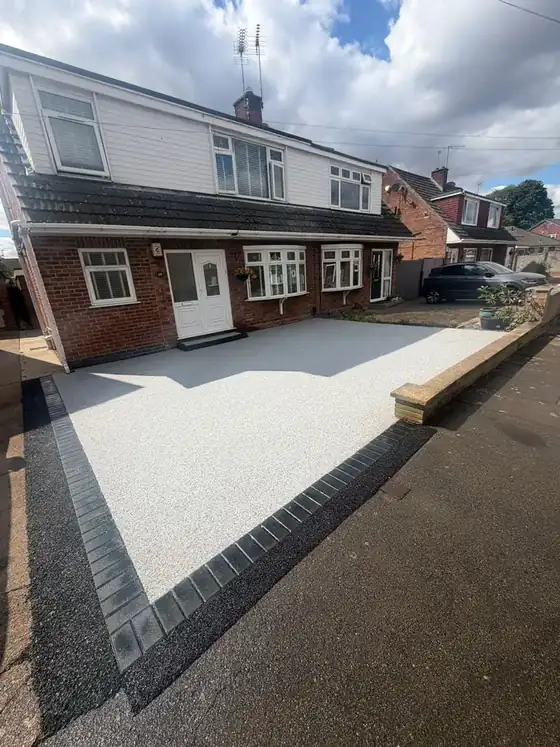
That band should cover all of it: breaking out and carting away whatever is there now, the dig, the stone base, mesh, concrete, colour, pattern, the joints and a first coat of sealer. Drives near £80 tend to be simple rectangles on free-draining ground with a lorry able to park outside. The ones near £115 are on clay, need the concrete pumped or barrowed in, or have a lot of shaped edges. Our driveway cost page sets out how the ground, the access and the old surface move every quote we write, whatever the material. If you’ve had a price well below £80 a metre, ask which of those lines it leaves out.
Pricing a 1930s semi frontage, plus two other Havering shapes
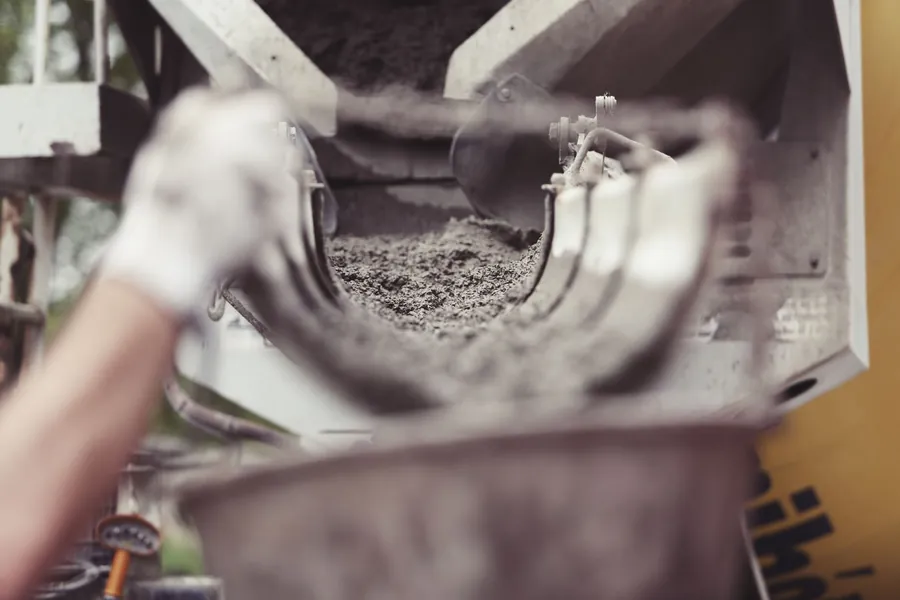
Size does most of the work in any total. Concrete adds a fixed cost that block and resin don’t have: the delivery. A small drive still needs a full crew for the pour, and suppliers commonly charge extra for part-loads, so a short front pays more per square metre than a big one.
The interwar semi, about 45m²
Lift the lawn and the dwarf wall off a typical bay-fronted semi in Hornchurch, Elm Park or the Upminster Garden Suburb and you’re usually left with about 45 square metres, enough for two cars. In pattern imprinted concrete that comes to roughly £3,600 to £5,200. Keeping a planted strip along the party fence trims the area a little, and it also helps with drainage, which we come back to further down.
The Cranham bungalow, about 30m²
A one-car front with a path to the door gives you about 30 square metres, which comes to around £2,500 to £3,500. This is the shape where the pour-day costs bite hardest, so expect a quote nearer the top of the band.
The Emerson Park approach, 100m² and over
The bigger detached plots in Emerson Park often have a long approach and a turning area. At 100 square metres the band runs from £8,000 to £11,500. On a drive this size a single pattern can start to look repetitive, and a lot of owners break it up with a contrasting border, which adds a little.
The groundwork: dig-out, sub-base, mesh and joints
Most of a PIC quote pays for the slab you’ll never see. Getting this part right matters more with concrete than with almost any other surface, because a slab can’t flex like tarmac or be lifted and relaid like blocks.
Dig-out on London Clay
North of the railway, through Emerson Park, Ardleigh Green and Cranham, the subsoil is mostly London Clay. The British Geological Survey’s description of the London Clay Formation calls it a silty clay, and in practice it swells through a wet winter and shrinks back in a dry summer. A rigid slab sitting on that movement will crack unless the base under it is deep and well compacted. Expect a deeper dig there than on the Thames terrace gravels round South Hornchurch and Elm Park, which means more muck to take away and more stone to bring in.
Sub-base
Most installers allow 100 to 150mm of compacted MOT Type 1, and more on soft clay, often over a geotextile membrane to stop the stone working down into the clay. Ask for the depth in writing. Two quotes that differ by a thousand pounds on the same drive usually differ in this layer.
Reinforcement mesh
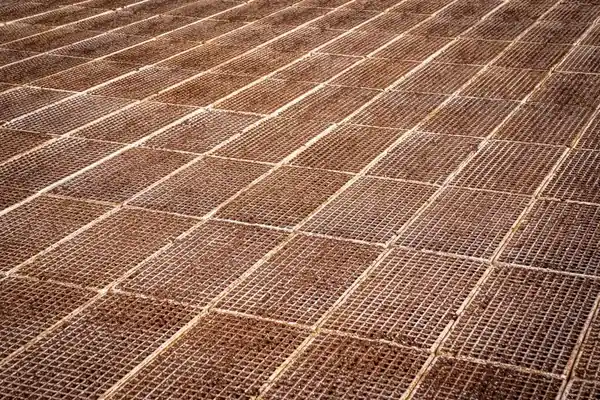
Steel fabric (A142 or A193 are the common grades) sits in the slab and holds it together if it cracks, so a crack stays a hairline instead of becoming a step. Some firms use fibres instead of, or alongside, mesh. A quote that mentions neither is worth questioning.
Expansion and control joints
Concrete shrinks as it cures and moves with the seasons afterwards. Proper joints give it somewhere to crack neatly: an expansion strip against the house and any walls, and sawn control joints that split the drive into bays a few metres across. On a well-planned drive the joints follow the pattern and you barely notice them. Leave them out and the drive will crack anyway, just in a line nobody chose.
Pattern, colour, sealing and the extras people forget
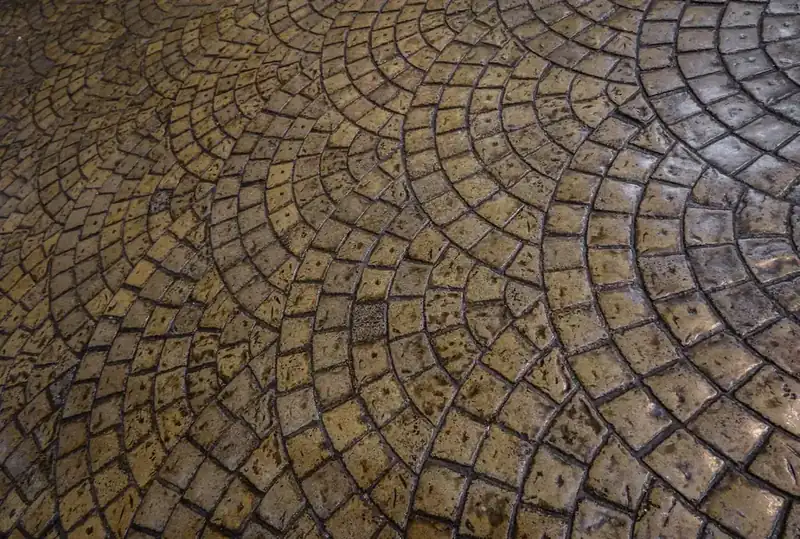
A fancier pattern barely changes the price, which surprises people. Ashlar slate, random stone, European fan and herringbone brick all use the same concrete, and the mats are the contractor’s own kit. What you’re really choosing is the colour. A base colour with a darker “release” shade to pick out the joints is normal, and most firms don’t charge more for it. Two-tone borders and bespoke features cost more because they take more labour on the day.
The first coat of sealer should be in the price. It’s what makes the colour look deep, and it keeps oil and tyre marks from soaking in. What catches people out is everything around the slab:
- Access. If the mixer lorry can’t reach, the concrete is pumped or barrowed in, and on a terrace with no side access that can add a few hundred pounds.
- Skips and spoil. Breaking out an old 1970s concrete drive produces far more waste than lifting turf.
- Weather. Concrete shouldn’t be poured with frost forecast, and in a hot spell the crew has to imprint fast before it goes off. Winter jobs in Havering get rebooked more often than summer ones.
- Manholes. Covers have to be raised or swapped for recessed trays, and each one adds a little.
Cracking: what can be repaired and what can’t
Every concrete drive will crack somewhere. What matters is whether the cracks run along the joints, where they’re meant to go, or straight across the bays.
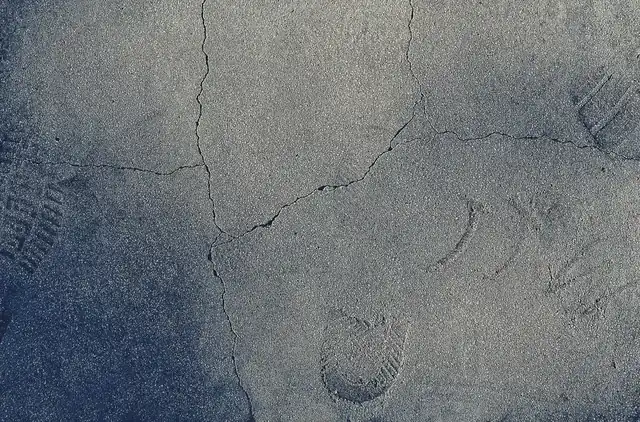
A fine hairline crack in a bay can be cleaned out, filled with a tinted filler and sealed over. It will still show, but it’ll stop water getting in and moss getting a hold. A crack that has opened wide, or where one side has dropped below the other, is a different problem: the base has moved, and on clay that often points to a shallow dig or a leaking drain nearby. Patching won’t help, because new concrete never matches faded old concrete, and the pattern can’t be re-pressed into a slab that has already set.
Think about that before you buy. If a water or gas pipe under the drive ever needs digging up, the reinstated strip will always show. Block paving can be lifted and put back. Imprinted concrete can’t. If an old PIC drive is ugly but still solid, laying resin bound over the top is often cheaper than breaking it out. We cover the costs of that and other fixes in our guide to driveway repair costs in Hornchurch and Upminster.
Drainage, front-garden planning rules and Havering dropped kerbs
Concrete doesn’t let water through, so where the rain goes is a design decision, and you should see it on the quote. Paving more than five square metres of a front garden with a surface that doesn’t drain needs planning permission, unless the water runs off to somewhere it can soak away. The Planning Portal’s guide to paving your front garden says no application is needed if the rainwater is directed to a lawn or border to drain naturally.
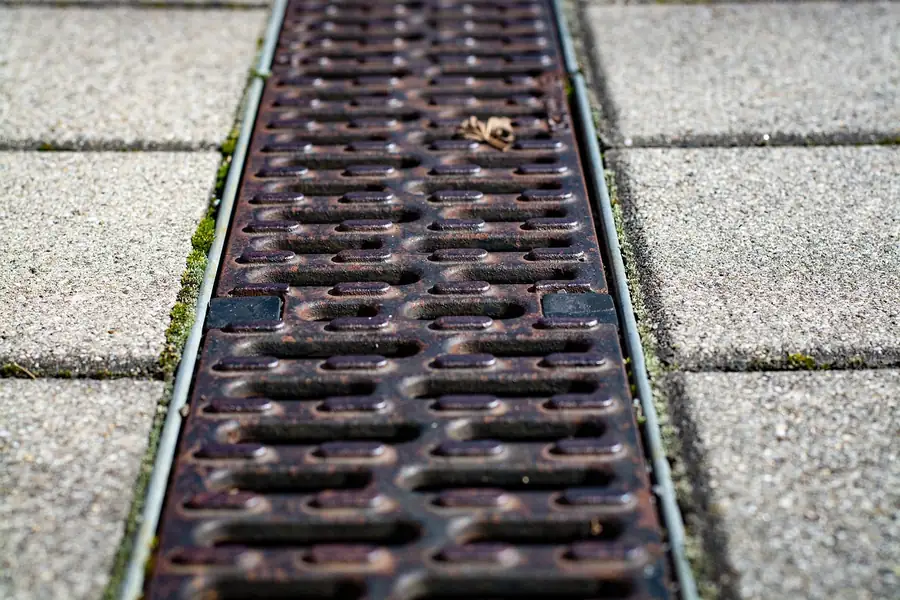
In practice that means laying the slab to a fall, with a channel drain at the gate or along the house, emptying to a soakaway or a planted bed. On the gravel south of the railway a soakaway works fine. On clay it often won’t drain fast enough, and a border is the more honest answer. If a quote shows a slab with no channel and no fall, you have a planning problem as well as a puddle.
The kerb is a separate job and only the council can do it. Havering Council’s dropped kerb page lists a non-refundable £261 application fee, and only the council or its approved contractors may carry out the work. Some roads also need planning permission before the council will consider it. Apply before the drive is poured so the gateway levels can be set to suit the new kerb.
Lifespan, resealing and how the cost compares with block, resin and tarmac
A well-built imprinted drive will usually give 15 to 20 years, and getting there depends mostly on the sealer. Plan on a clean and reseal every two to three years, sooner on a south-facing front where the sun breaks it down faster. On a semi front that’s normally a few hundred pounds each time. Leave it too long and the colour hardener wears through to grey concrete. Resealing can’t bring that back.
On the same 45 square metre semi front, here’s how imprinted concrete lines up against the other four, using our own prices for those:
- Gravel on a grid: about £2,025 to £3,150
- Tarmac: about £2,500 to £3,600
- Block paving: about £3,400 to £5,200
- Imprinted concrete: about £3,600 to £5,200
- Resin bound: about £3,600 to £5,400
On the day you pay, there isn’t much between PIC, block and resin. The difference shows up later. Block lets you lift and relay a sunken patch, and resin can be laid permeable, so it needs no channel at all. Imprinted concrete needs resealing for as long as you own it, and a repair will always show. The full breakdowns are in our block paving cost guide, our resin driveway prices and our tarmac cost breakdown. The most recent of the set, our gravel driveway cost guide, covers the cheapest option of the lot.
If you’re still weighing it up, a site visit and a trial hole will tell you what the ground under your front needs before you settle on a surface. Book a free driveway quote in Hornchurch or Upminster and we’ll price the options side by side.