01
St Chad's Park
Barking and Dagenham's oldest park, dating from 1830, with 15 hectares of grass and mature trees on the south side of the High Road, a few minutes from the station.
Learn more about St Chad's Park on Google MapsUpminster, RM14 - covering Hornchurch, Romford and the whole of Havering
If you are pricing patios in Chadwell Heath, the thing to know about your garden is that it sits on London Clay. That is true whether you are in an Edwardian terrace off St Chad's Road, a 1920s semi on Wangey Road or one of the 1930s houses spreading out along Whalebone Lane North towards Marks Gate. Clay is a good, firm ground to build on when it is treated right, and a nightmare when it is not, because it swells in a wet winter and shrinks back in a dry August. We have seen plenty of patios here that went in on a thin layer of sand and have been rocking ever since. Ours go down on a properly compacted stone base, laid to fall, so the clay underneath has much less say in the matter.
We reply the same working day, usually within the hour.
Chadwell Heath is about twenty minutes from our Upminster base along the A12. After 35 years of patios and drives, Jim and his family understand garden paving on slow-draining London Clay.
We keep the business small and the travel short, which holds overheads down and keeps patio prices lean. Most work still comes from people who were recommended to us.
01
A compacted MOT Type 1 base, laid in two layers over a geotextile membrane, spreads the load and keeps the slabs from following the clay as it shifts through the seasons. That is the difference between a patio that lasts and one that rocks.
02
Clay gardens hold water for days after rain. Swapping the trodden patch outside the back door for a sealed terrace gives you somewhere dry to stand from October to March.
03
We never count on clay to soak anything up. The patio falls at least 1 in 80 away from the house into a gully, a channel or a planted border that can cope with it.
04
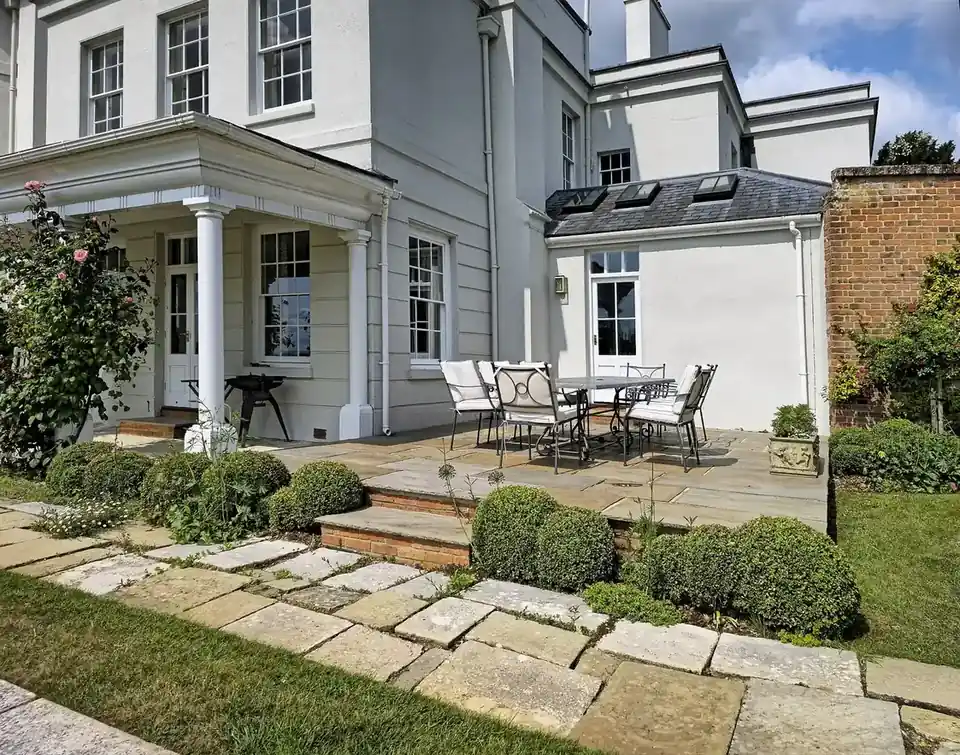
Warm sandstone sits well against the red brick of the Edwardian streets, while grey porcelain suits a rendered 1930s semi. We bring samples so you can hold them against your own wall.
05
Most of the gardens behind the 1920s and 1930s semis here are long enough for a dining terrace and a lawn beyond it, with a step if the levels drop away.
06
Joints filled with a two-part resin compound set solid, so you are not out with a knife every spring picking grass out of the gaps like you would be with old sand joints.
Local
Upminster Based
Hornchurch, Upminster and across Havering
6
Surface Types
Resin to gravel, one crew for all of it
Free
Site Visits & Quotes
Written, itemised and fixed
Written
Guarantee
Handed over on paper at the final walk-round
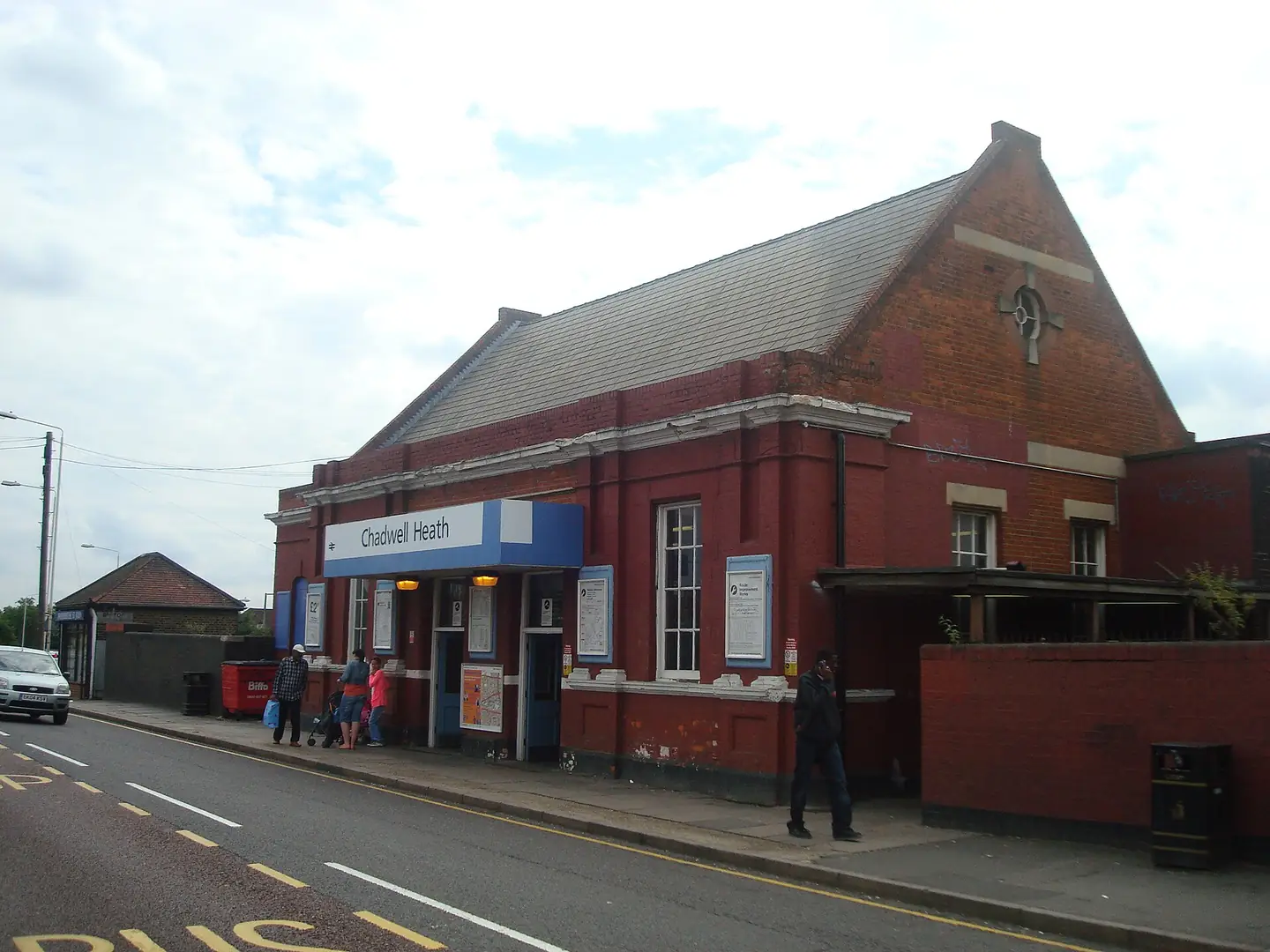
Chadwell Heath grew in stages. The streets near the station and around St Chad's Road went up in the years either side of the First World War, and the semis along Whalebone Lane North and towards Marks Gate followed in the 1930s. The Edwardian terraces tend to have narrower gardens with a back addition, so the patio usually runs as a strip beside it. The interwar semis have wider plots and often a side gate, which makes a real difference to us, because bringing slabs round the side is quicker and cleaner than carrying everything through your front room.
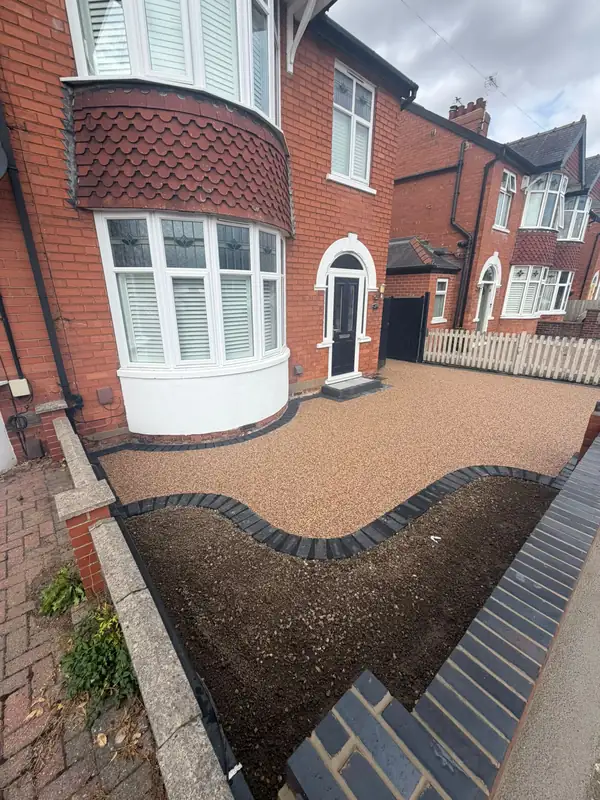
The clay ties it all together. It is slow to drain, it moves, and it punishes a cheap base. So on every Chadwell Heath patio we dig deeper than we would on the gravel down towards the Thames, lay a membrane, and compact the stone in layers. The same ground is behind most of the dips and cracks we see on front drives in the area too, and if yours has started to sink where the car sits, we can talk about fixing a sinking drive in Chadwell Heath while we are measuring up the garden.
Planning authority: Redbridge Council or Barking and Dagenham Council (depends on the street)
Here is how the job runs from our first visit to the day you put the chairs out. The clay mostly affects steps three to five, which is where cheaper quotes tend to cut corners.
We measure the garden, check how far below the damp-proof course the finished patio has to sit, and dig a test hole if we need to see how wet the clay is.
You get a plan showing the slab, the pattern, any steps and which way the water runs, with one written price that covers labour, materials and taking the waste away.
Turf, topsoil and any old paving come out to full depth. On clay that is usually a bit more than people expect, because the base needs room to do its job.
A geotextile membrane goes on the clay, then 100 to 150 mm of MOT Type 1 compacted in two separate layers. This is the part nobody sees and everything depends on.
Edge restraints are set firm, the 1 in 80 fall is checked across the base, and any gully, channel drain or border outlet goes in before slabs are laid.
Slabs are bedded on full mortar and tapped down to line and level. Porcelain is primed on the back so it grips; sandstone is laid to mix the colours evenly.
Resin jointing compound goes into the gaps, the surface is cleaned, and we walk it with you. You can stand on it next day and set furniture on it after two or three days.
Not sure which surface suits the house? The cost guide compares all six side by side, and the site visit is free either way.
Most guarantees in this trade cover the surface, because the surface is the easy bit. Ours is written around the structure underneath, which is where a driveway on Havering's London clay either holds or does not. We put the excavation depth, the compacted MOT Type 1 thickness, the concrete haunch behind every edge and the drainage route on the quote, and we guarantee that build. If the surface sinks, spreads or ponds because any of that was not done right, we come back and fix it at our cost.
In
Writing, before we start
The guarantee terms go on the quote, not on a leaflet after the job
0
Overlays on a bad base
We will not lay a new surface over a base that has already failed, however cheap it would make the quote
Start by asking about the base, and listen for how specific the answer is. Someone who knows the area will mention the clay without being prompted, talk about a membrane and compacting in layers, and give you a depth. Someone who says a bit of sand and cement will be fine is planning the patio for a gravel garden, and yours is not one. On clay you can see a cheap base fail within a couple of winters.
Then ask about water. Because Chadwell Heath ground drains slowly, every patio needs a plan for where the rain goes, and a soakaway in clay is not much of a plan. A good installer will point to the gully or the border the water is heading for, explain the fall, and show it on the drawing. If the quote does not mention drainage at all, that is a gap you will notice the first wet week.
Finally, ask how they will get materials in. A 1930s semi with a side gate is easy. An Edwardian terrace with no side access means slabs through the house, and that needs a careful crew who protect floors and do not leave dust everywhere. Get the access cost in the written price up front. We would much rather tell you on the visit than surprise you on day two.
Each of the four slabs we lay has a place. This is how they stack up on clay ground behind the houses here.
| Option | Porcelain | Indian sandstone | Limestone | Concrete slabs |
|---|---|---|---|---|
| Laid price per m² | £110 to £150 | Around £90 to £120 | £100 to £135 | £75 to £95 |
| How long it should last | Decades if the base holds | Decades, with upkeep | Decades, with upkeep | Shorter, edges chip |
| Water taken in | Next to none | Moderate, seal it | Some, seal it | Fairly high |
| Going green in a damp garden | Very little | Quickly in shade | Slower than sandstone | Moss in the texture |
| Looking after it | Brush and soapy water | Yearly clean and reseal | Clean and reseal now and then | Jet wash and hope |
| Pairs well with | Rendered 1930s semis | Red brick Edwardian terraces | Either, if kept clean | A budget refresh |
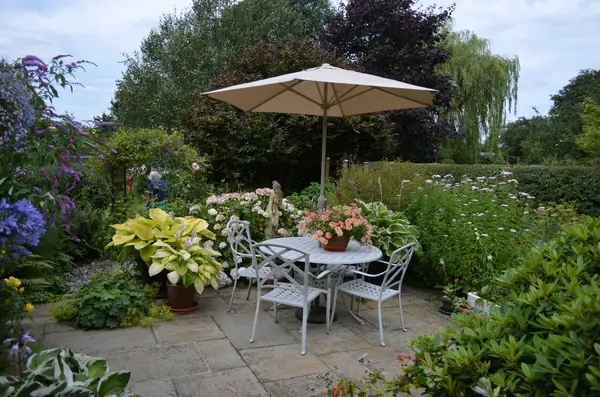
On the longer gardens behind the 1930s semis, a terrace by the house with one or two steps down to the lawn usually works best, and a low brick wall can double as seating. Edwardian strips suit large slabs run lengthways so the space does not look chopped up. Sandstone looks best in a random mix of sizes, while porcelain tends to suit a neat stretcher bond.
"A good few of the patios we are asked to replace in Chadwell Heath were never short of slabs, only short of base, with sand laid straight onto the clay."
Based on enquiries and jobs handled by Hornchurch & Upminster Driveways.
We charge £90 to £150 per m² for a laid patio, and the slab you pick makes most of that difference. As a guide, a 25 m² terrace behind a semi with no steps or walls usually comes in at £2,300 to £3,800 and takes three or four working days. Larger gardens of 40 to 60 m² with steps and low walls cost more, and we price those from the drawing.
Guide price from
£90/m²
Chadwell Heath prices are fixed in writing after a free site visit.
Get A Fixed QuoteWhile we are digging out and the skip is on the road, you might fancy getting away from the noise, and there are three nice spots within easy reach of Chadwell Heath.
01
Barking and Dagenham's oldest park, dating from 1830, with 15 hectares of grass and mature trees on the south side of the High Road, a few minutes from the station.
Learn more about St Chad's Park on Google Maps02
Twenty-five acres on the Redbridge side with Green Flag status and a sensory garden, a short walk west of Chadwell Heath towards Goodmayes.
Learn more about Goodmayes Park on Google Maps03
The borough's local history museum in a 15th-century timber-framed manor house down Becontree Avenue, free to visit Tuesday to Saturday and worth the walk south from the High Road.
Learn more about Valence House Museum on Google MapsWe work across Chadwell Heath on both sides of the High Road, from St Chad's Park up to Marks Gate and across to Goodmayes.
For a back garden patio, normally not, as it counts as permitted development. Exceptions are listed buildings, raising ground levels a lot near a boundary, and flats or maisonettes. If you do need to ask, it depends on the street: part of Chadwell Heath is in Redbridge Council and part is in Barking and Dagenham Council, so check your address first. Front gardens are different. A new hard surface over 5 m² needs permission there unless it is permeable or drains to a lawn or border.
Only if the base is skimped. London Clay swells when it is wet and shrinks when it dries, and a patio laid on sand straight over it moves with it. We put a geotextile membrane on the clay, then 100 to 150 mm of MOT Type 1 compacted in two layers, with the slabs on full mortar. That gives a firm platform the seasonal movement does not break up.
Usually a strip of large slabs running away from the house, beside the back addition, with a fall towards a gully or a border. Porcelain is good if the strip is shaded by the neighbour's wall, since it does not go green the way sandstone does. Big slabs mean fewer joints, which keeps the space looking calm and makes it feel wider than it is.
A plain 25 m² terrace with no walls or steps is three to four working days. Steps, walls or a long run of drainage pipe push that out by a day or two. You can walk on it the day after pointing, and we ask you to keep the table and chairs off for two or three days while the joints harden fully.
Yes, we lay a lot of it, in 20 mm thickness. It is harder to cut than stone and it needs a slurry primer on the back of every slab or it will not bond to the mortar. Laid properly on a full bed it is very hard-wearing, barely stains and suits clay gardens because it shrugs off the damp.
Because the clay under Chadwell Heath does not let water through fast enough for a soakaway to do much. A pit dug in clay tends to fill and stay full. We send the run-off to an existing gully, a channel drain along the edge or a planted border instead, with the patio laid to a fall of at least 1 in 80.
We would rather show you a driveway than a star rating.
Customer reviews are being collected and will appear here as they come in. In the meantime, when we come out to quote in Chadwell Heath, ask to see photos of recent jobs on houses like yours - and ask the other firms quoting the same question. A finished drive two streets away tells you more than a testimonial ever will.
Give us a ring on 01708 209015 or send the form, and we will come out, look at your garden and the clay, and leave you a written price.