Ask how they plan to find out what the ground is. An installer who quotes from a photo, or from the back step without walking down the garden, is guessing. On the ridge that guess can be 50 mm of base out across a whole terrace, which is a day's labour and several tonnes of stone either way. Someone who digs a trial hole, or at the very least probes the soil, is pricing your garden rather than an average one. If they cannot tell you whether you are on sand or on clay, keep ringing round.
Then ask about the base in actual numbers. You want to hear MOT Type 1, a stated depth, compaction in layers and, on clay, a membrane. Vague talk about a decent bit of hardcore usually means broken brick left over from the last job. Ask how the slabs will be bedded as well. A full bed of mortar under each one is the standard. Five dabs in the corners and the middle saves the installer time and leaves voids underneath, where water collects, freezes and cracks the stone from below.
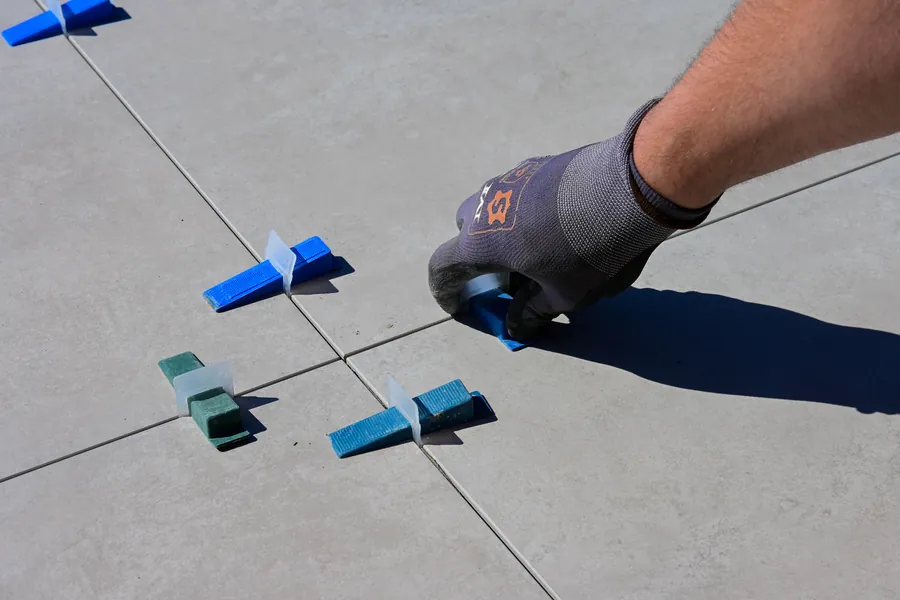
Last of all, the stone itself. Indian sandstone on sale varies enormously, and the cheap stuff is often uncalibrated, which means the thickness swings from one slab to the next and each has to be bedded up or down by eye. We lay 22 mm calibrated sandstone and 20 mm porcelain, so the finished surface comes out flat. A good installer will happily show you a sample outdoors, wet and dry, because sandstone in particular looks very different after a shower than it does in the showroom.